 Sheet Music Exchange is a web site for those who wants to access popular sheet music easily,
letting them download the sheet music for free for trial purposes.
It's completely free to download and try the listed sheet music, but you have to delete the files after 24 hours of trial period.
Don't forget, if you like the piece of music you have just learned playing,
treat the artist with respect, and go buy the original sheet music.
Sheet Music Exchange is a web site for those who wants to access popular sheet music easily,
letting them download the sheet music for free for trial purposes.
It's completely free to download and try the listed sheet music, but you have to delete the files after 24 hours of trial period.
Don't forget, if you like the piece of music you have just learned playing,
treat the artist with respect, and go buy the original sheet music.
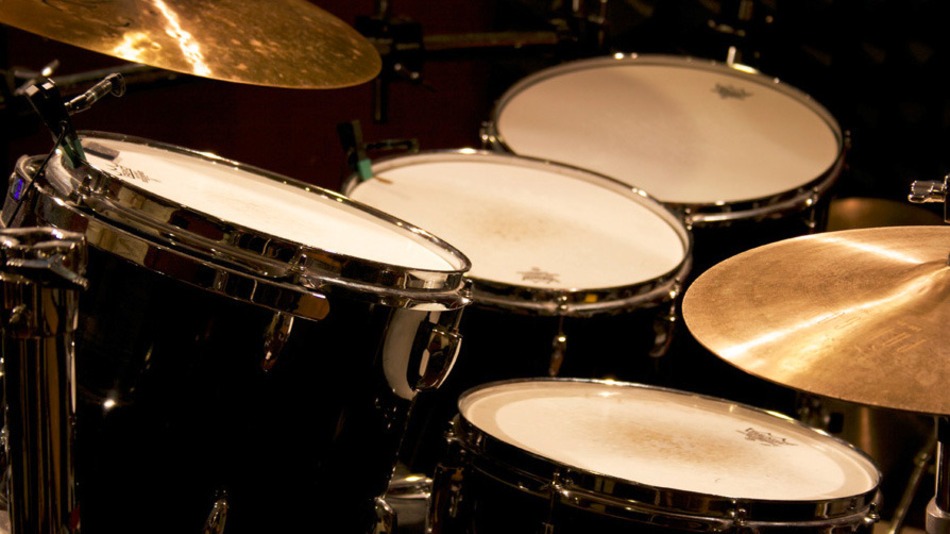
Drum Sheet Music
 "I also generally play slide guitar in standard tuning, which enables me to switch back and forth between using the slide and fretting notes and chords conventionally without having to relearn the fretboard, as one must do when playing in an open tuning." Warren Haynes / Government Mule / Allman Bros. Band
Blackmore's Night
Blackmore's Night is a Renaissance-inspired folk rock band led by Ritchie Blackmore (electric and acoustic guitar) and Candice Night (lyricist and lead vocals).
The origins of the band lie in 1989 when Candice Night was working at a local New York rock music radio station. She first encountered Ritchie Blackmore, then with Deep Purple, at a football game in which he was playing. The two became romantically involved and discovered that they shared a passionate interest in the Renaissance.
After leaving Deep Purple in 1993 and recording the album Stranger in Us All in 1995, on which Night contributed backing vocals and some of the lyrics, Blackmore became interested in the idea of bringing Renaissance music to a contemporary audience. Night's personality and singing ability made her the natural choice as "frontwoman." In 1997 the pair were ready to launch the band, the name being a pun of their own names, and which would consist of themselves plus session musicians.
The origins of the band lie in 1989 when Candice Night was working at a local New York rock music radio station. She first encountered Ritchie Blackmore, then with Deep Purple, at a football game in which he was playing. The two became romantically involved and discovered that they shared a passionate interest in the Renaissance.
After leaving Deep Purple in 1993 and recording the album Stranger in Us All in 1995, on which Night contributed backing vocals and some of the lyrics, Blackmore became interested in the idea of bringing Renaissance music to a contemporary audience. Night's personality and singing ability made her the natural choice as "frontwoman." In 1997 the pair were ready to launch the band, the name being a pun of their own names, and which would consist of themselves plus session musicians.
Ronald Miller
Ronald Norman Miller (c. 1933 - July 23, 2007) was an American popular songwriter and record producer, who attained many Top 10 hits with ballads written for Motown artists in the 1960s and 1970s.
Miller was born in Chicago and was discovered playing in a bar by Motown founder Berry Gordy.
He penned a number of songs for Stevie Wonder, including four hit singles, in the period prior to 1971 when Wonder took control of his own recordings.
Miller's most famous hit song was Stevie Wonder's "For Once in My Life" which was written the night his daughter Angel was born. It is one of the most covered songs in pop history with more than 270 recorded versions. A version recorded by Tony Bennett and Wonder won a Grammy Award in 2007. A version of his song "Heaven Help Us All" by Ray Charles and Gladys Knight won a Grammy Award for best gospel performance in 2005.
Miller was born in Chicago and was discovered playing in a bar by Motown founder Berry Gordy.
He penned a number of songs for Stevie Wonder, including four hit singles, in the period prior to 1971 when Wonder took control of his own recordings.
Miller's most famous hit song was Stevie Wonder's "For Once in My Life" which was written the night his daughter Angel was born. It is one of the most covered songs in pop history with more than 270 recorded versions. A version recorded by Tony Bennett and Wonder won a Grammy Award in 2007. A version of his song "Heaven Help Us All" by Ray Charles and Gladys Knight won a Grammy Award for best gospel performance in 2005.
Sammy Nestico
Samuel "Sammy" Louis Nestico (born February 6, 1924 in Pittsburgh, Pennsylvania) is a prolific and well known composer and arranger of big band music. Nestico is most known for his arrangements for the Count Basie orchestra.
Rachmaninoff
Sergei Vasilievich Rachmaninoff (1 April 1873 - 28 March 1943) was a Russian composer, pianist, and conductor. He was one of the finest pianists of his day and, as a composer, the last great representative of Russian late Romanticism in classical music. Early influences of Tchaikovsky, Rimsky-Korsakov and other Russian composers gave way to a thoroughly personal idiom which included a pronounced lyricism, expressive breadth, structural ingenuity and a tonal palette of rich, distinctive orchestral colors.
Understandably, the piano figures prominently in Rachmaninoff's compositional output, either as a solo instrument or as part of an ensemble. He made it a point, however, to use his own skills as a performer to explore fully the expressive possibilities of the instrument. Even in his earliest works, he revealed a sure grasp of idiomatic piano writing and a striking gift for melody. In some of his early orchestral pieces he showed the first signs of a talent for tone painting, which he would perfect in The Isle of the Dead, and he began to show a similar penchant for vocal writing in two early sets of songs, Opp. 4 and 8. Rachmaninoff's masterpiece, however, is his choral symphony The Bells, in which all of his talents are fused and unified.
Rachmaninoff sometimes felt threatened by the success of modernists such as Scriabin and Prokofiev and wondered whether to cease composing even before he left Russia. His musical philosophy was rooted in the Russian spiritual tradition, where the role of the artist was to create beauty and to speak the truth from the depths of his heart. In his last major interview, in 1941, he admitted his music, like Russian music, was a product of his temperament. He said, on another occasion, "The new kind of music seems to create not from the heart but from the head. Its composers think rather than feel. They have not the capacity to make their works exalt—they meditate, protest, analyze, reason, calculate and brood, but they do not exalt."
Understandably, the piano figures prominently in Rachmaninoff's compositional output, either as a solo instrument or as part of an ensemble. He made it a point, however, to use his own skills as a performer to explore fully the expressive possibilities of the instrument. Even in his earliest works, he revealed a sure grasp of idiomatic piano writing and a striking gift for melody. In some of his early orchestral pieces he showed the first signs of a talent for tone painting, which he would perfect in The Isle of the Dead, and he began to show a similar penchant for vocal writing in two early sets of songs, Opp. 4 and 8. Rachmaninoff's masterpiece, however, is his choral symphony The Bells, in which all of his talents are fused and unified.
Rachmaninoff sometimes felt threatened by the success of modernists such as Scriabin and Prokofiev and wondered whether to cease composing even before he left Russia. His musical philosophy was rooted in the Russian spiritual tradition, where the role of the artist was to create beauty and to speak the truth from the depths of his heart. In his last major interview, in 1941, he admitted his music, like Russian music, was a product of his temperament. He said, on another occasion, "The new kind of music seems to create not from the heart but from the head. Its composers think rather than feel. They have not the capacity to make their works exalt—they meditate, protest, analyze, reason, calculate and brood, but they do not exalt."
Gordon Goodwin
Gordon L. Goodwin (born 1954) is an American studio pianist, saxophonist, composer, arranger and conductor. He now lives in Southern California with his wife Lisa, daughter Madison and two sons, Trevor and Garrison.
Guy Bergeron
Guy Bergeron was born the 13th of October 1964 in Loretteville, Province of Quebec, Canada. He graduated in music: in 1990, 3rd cycle in composition at the Conservatoire de musique of Quebec; in 1986, collegial grade (DEC) in pop music, Cegep of Drummondville, and in 1984, collegial grade (DEC) in music, Cegep of Ste-Foy, with guitar as first instrument. He was also a student in jazz interpretation from 1992 until 1994 at the University of Montreal (electric guitar) and he studied computer-assisted music at the Musitechnic School in Montreal. He plays the guitar (classical, electric, acoustic, synthesizer), the banjo, the mandolin and the bass. He's been earning his living with music for more than 25 years, as a professional musician, a composer, an arranger and also as a studio engineer as he manages his own studio.
pat metheny
Patrick Bruce "Pat" Metheny (/məˈθiːni/ mə-thee-nee; born August 12, 1954) is an American jazz guitarist and composer.
He is the leader of the Pat Metheny Group and is also involved in duets, solo works and other side projects. His style incorporates elements of progressive and contemporary jazz, post-bop, latin jazz and jazz fusion. Pat Metheny has three gold albums and 20 Grammy Awards. He is the brother of jazz flugelhornist and journalist Mike Metheny.
He is the leader of the Pat Metheny Group and is also involved in duets, solo works and other side projects. His style incorporates elements of progressive and contemporary jazz, post-bop, latin jazz and jazz fusion. Pat Metheny has three gold albums and 20 Grammy Awards. He is the brother of jazz flugelhornist and journalist Mike Metheny.
Jose Norman
English musician, born 1906 in Liverpool; died 1990. Known for writing "Cuban Pete".
He lived in France for some years where he was trained as a classical pianist, and performed as Norman Henderson. Also led a Hawaiian band in the 1920s.
Married Manuela Garcia-Iniguez Enamorado in July of 1933, and moved to London.
He lived in France for some years where he was trained as a classical pianist, and performed as Norman Henderson. Also led a Hawaiian band in the 1920s.
Married Manuela Garcia-Iniguez Enamorado in July of 1933, and moved to London.