 Sheet Music Exchange is a web site for those who wants to access popular sheet music easily,
letting them download the sheet music for free for trial purposes.
It's completely free to download and try the listed sheet music, but you have to delete the files after 24 hours of trial period.
Don't forget, if you like the piece of music you have just learned playing,
treat the artist with respect, and go buy the original sheet music.
Sheet Music Exchange is a web site for those who wants to access popular sheet music easily,
letting them download the sheet music for free for trial purposes.
It's completely free to download and try the listed sheet music, but you have to delete the files after 24 hours of trial period.
Don't forget, if you like the piece of music you have just learned playing,
treat the artist with respect, and go buy the original sheet music.
Piano Sheet Music
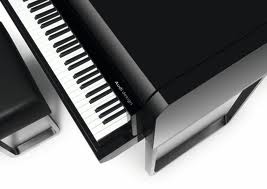 "After silence that which comes nearest to expressing the inexpressible is music." Oscar Hammerstein
Moritz Moszkowski
Moritz (Maurice) Moszkowski (23 August 1854 – 4 March 1925) was a German composer, pianist, and teacher of Polish descent. Ignacy Paderewski said, "After Chopin, Moszkowski best understands how to write for the piano". Although little known today, Moszkowski was well-respected and popular during the late nineteenth century.
His music is brilliant, but has also been described as "devoid of the masculine and the feminine". He wrote over two hundred small-scale piano pieces, which brought him much popularity – notably his set of Spanish Dances, Op. 12, for piano duet (later arranged for solo piano, and for orchestra ). His early Serenade, Op. 15, was world-famous and appeared in many guises, including the song Liebe, kleine Nachtigall. Today he is probably best known for his fifteen Études de Virtuosité, Op. 72, which have been performed by virtuoso pianists such as Vladimir Horowitz and Marc-André Hamelin. Surprisingly, their first complete recording was not until 1970 (by Ilana Vered). Many of his small but brilliant piano pieces, such as Étincelles (Sparks), are used as encore performances at the end of classical concerts.
He also wrote larger scale works including the Piano Concerto in E major, Op. 59 (1898), the Violin Concerto in C major, Op. 30, three orchestral suites (Opp. 39, 47, 79), and a symphonic poem Jeanne d'Arc, Op. 19.
He wrote the opera Boabdil der letzte Maurenkönig, Op. 49, on the historical theme of the capture of Granada. It was premiered at the Berlin Court Opera on 21 April 1892, and appeared in Prague and New York the following year. It did not stay in the repertoire, but its ballet music was very popular for a number of years. He wrote a three-act ballet Laurin in 1896.
His music is brilliant, but has also been described as "devoid of the masculine and the feminine". He wrote over two hundred small-scale piano pieces, which brought him much popularity – notably his set of Spanish Dances, Op. 12, for piano duet (later arranged for solo piano, and for orchestra ). His early Serenade, Op. 15, was world-famous and appeared in many guises, including the song Liebe, kleine Nachtigall. Today he is probably best known for his fifteen Études de Virtuosité, Op. 72, which have been performed by virtuoso pianists such as Vladimir Horowitz and Marc-André Hamelin. Surprisingly, their first complete recording was not until 1970 (by Ilana Vered). Many of his small but brilliant piano pieces, such as Étincelles (Sparks), are used as encore performances at the end of classical concerts.
He also wrote larger scale works including the Piano Concerto in E major, Op. 59 (1898), the Violin Concerto in C major, Op. 30, three orchestral suites (Opp. 39, 47, 79), and a symphonic poem Jeanne d'Arc, Op. 19.
He wrote the opera Boabdil der letzte Maurenkönig, Op. 49, on the historical theme of the capture of Granada. It was premiered at the Berlin Court Opera on 21 April 1892, and appeared in Prague and New York the following year. It did not stay in the repertoire, but its ballet music was very popular for a number of years. He wrote a three-act ballet Laurin in 1896.
Justin Timberlake
Justin Randall Timberlake (born January 31, 1981) is an American pop singer-songwriter, record producer, dancer and actor. He has won six Grammy Awards as well as an Emmy Award.
Justin Timberlake came to fame as one of the lead singers of pop "boy band" (or "vocal harmony group") 'N Sync, whose launch was financed by Lou Pearlman. In 2002, he released his debut solo album, Justified, which sold more than 7 million copies worldwide. Timberlake's second solo release, FutureSex/LoveSounds, was released in 2006 with the U.S. number-one hit singles "SexyBack", "My Love", and "What Goes Around.../...Comes Around". The album also spawned three additional U.S. top twenty hits ("Summer Love", "LoveStoned", and "Until the End of Time"). As of January 2008, FutureSex/LoveSounds has sold more than 8.6 million copies. With his first two albums, Timberlake has sold more than 18 million records worldwide alone, as well as more than 50 million copies as one of the two lead singers in 'N Sync. His other ventures include record label Tennman Records, fashion label William Rast, and the restaurants Destino and Southern Hospitality.
Justin Timberlake came to fame as one of the lead singers of pop "boy band" (or "vocal harmony group") 'N Sync, whose launch was financed by Lou Pearlman. In 2002, he released his debut solo album, Justified, which sold more than 7 million copies worldwide. Timberlake's second solo release, FutureSex/LoveSounds, was released in 2006 with the U.S. number-one hit singles "SexyBack", "My Love", and "What Goes Around.../...Comes Around". The album also spawned three additional U.S. top twenty hits ("Summer Love", "LoveStoned", and "Until the End of Time"). As of January 2008, FutureSex/LoveSounds has sold more than 8.6 million copies. With his first two albums, Timberlake has sold more than 18 million records worldwide alone, as well as more than 50 million copies as one of the two lead singers in 'N Sync. His other ventures include record label Tennman Records, fashion label William Rast, and the restaurants Destino and Southern Hospitality.
Tori Amos
Tori Amos (born Myra Ellen Amos on August 22, 1963) is a pianist and singer-songwriter of dual British and American citizenship. She is married to English sound engineer Mark Hawley, with whom she has one child, Natashya "Tash" Lórien Hawley, born on September 5, 2000.
Amos was at the forefront of a number of female singer-songwriters in the early 1990s and was noteworthy early in her career as one of the few alternative rock performers to use a piano as her primary instrument. She is known for emotionally intense songs that cover a wide range of subjects including sexuality, religion and personal tragedy. Some of her charting singles include "Crucify", "Silent All These Years", "Cornflake Girl", "Caught a Lite Sneeze", "Professional Widow", "Spark", and "A Sorta Fairytale".
Amos had sold 12 million records worldwide as of 2005 and has also enjoyed a large cult following. Having a history of making eccentric and at times ribald comments during concerts and interviews, she has earned a reputation for being highly idiosyncratic. As a social commentator and sometimes activist, some of the topics she has been most vocal about include feminism, religion, and sexuality.
Amos was at the forefront of a number of female singer-songwriters in the early 1990s and was noteworthy early in her career as one of the few alternative rock performers to use a piano as her primary instrument. She is known for emotionally intense songs that cover a wide range of subjects including sexuality, religion and personal tragedy. Some of her charting singles include "Crucify", "Silent All These Years", "Cornflake Girl", "Caught a Lite Sneeze", "Professional Widow", "Spark", and "A Sorta Fairytale".
Amos had sold 12 million records worldwide as of 2005 and has also enjoyed a large cult following. Having a history of making eccentric and at times ribald comments during concerts and interviews, she has earned a reputation for being highly idiosyncratic. As a social commentator and sometimes activist, some of the topics she has been most vocal about include feminism, religion, and sexuality.
Jim Steinman
James Richard Steinman is an American composer, lyricist, record producer, and playwright. He has also worked as an arranger, pianist and singer. His work has included songs in the adult contemporary, rock and roll, dance, pop, musical theater and film score genres
Frank Sinatra
Francis Albert "Frank" Sinatra (December 12, 1915 â May 14, 1998) was an American singer and actor.
Beginning his musical career in the swing era with Harry James and Tommy Dorsey, Sinatra became a solo artist with great success in the early to mid-1940s, being the idol of the "bobby soxers". His professional career had stalled by the 1950s, but it was reborn in 1954 after he won the Academy Award for Best Supporting Actor.
He signed with Capitol Records and released several critically lauded albums (such as In the Wee Small Hours, Songs for Swingin' Lovers, Come Fly with Me, Only the Lonely and Nice 'n' Easy). Sinatra left Capitol to found his own record label, Reprise Records (finding success with albums such as Ring-A-Ding-Ding, Sinatra at the Sands and Francis Albert Sinatra & Antonio Carlos Jobim), toured internationally, and fraternized with the Rat Pack and President John F. Kennedy in the early 1960s. Sinatra turned 50 in 1965, recorded the retrospective September of My Years, starred in the Emmy-winning television special Frank Sinatra: A Man and His Music, and scored hits with "Strangers in the Night" and "My Way".
Sinatra attempted to weather the changing tastes in popular music, but with dwindling album sales and after appearing in several poorly received films, he retired in 1971. Coming out of retirement in 1973, he recorded several albums, scoring a hit with "(Theme From) New York, New York" in 1980, and toured both within the United States and internationally until a few years before his death in 1998.
Sinatra also forged a career as a dramatic actor, winning the Academy Award for Best Supporting Actor for his performance in From Here to Eternity, and he was nominated for the Academy Award for Best Actor for The Man with the Golden Arm. His also starred in such musicals as High Society, Pal Joey, Guys and Dolls and On the Town. Sinatra was honored with the Kennedy Center Honors in 1983 and awarded the Presidential Medal of Freedom by Ronald Reagan in 1985 and the Congressional Gold Medal in 1997. Sinatra was also the recipient of eleven Grammy Awards, including the Grammy Trustees Award, Grammy Legend Award and the Grammy Lifetime Achievement Award.
Beginning his musical career in the swing era with Harry James and Tommy Dorsey, Sinatra became a solo artist with great success in the early to mid-1940s, being the idol of the "bobby soxers". His professional career had stalled by the 1950s, but it was reborn in 1954 after he won the Academy Award for Best Supporting Actor.
He signed with Capitol Records and released several critically lauded albums (such as In the Wee Small Hours, Songs for Swingin' Lovers, Come Fly with Me, Only the Lonely and Nice 'n' Easy). Sinatra left Capitol to found his own record label, Reprise Records (finding success with albums such as Ring-A-Ding-Ding, Sinatra at the Sands and Francis Albert Sinatra & Antonio Carlos Jobim), toured internationally, and fraternized with the Rat Pack and President John F. Kennedy in the early 1960s. Sinatra turned 50 in 1965, recorded the retrospective September of My Years, starred in the Emmy-winning television special Frank Sinatra: A Man and His Music, and scored hits with "Strangers in the Night" and "My Way".
Sinatra attempted to weather the changing tastes in popular music, but with dwindling album sales and after appearing in several poorly received films, he retired in 1971. Coming out of retirement in 1973, he recorded several albums, scoring a hit with "(Theme From) New York, New York" in 1980, and toured both within the United States and internationally until a few years before his death in 1998.
Sinatra also forged a career as a dramatic actor, winning the Academy Award for Best Supporting Actor for his performance in From Here to Eternity, and he was nominated for the Academy Award for Best Actor for The Man with the Golden Arm. His also starred in such musicals as High Society, Pal Joey, Guys and Dolls and On the Town. Sinatra was honored with the Kennedy Center Honors in 1983 and awarded the Presidential Medal of Freedom by Ronald Reagan in 1985 and the Congressional Gold Medal in 1997. Sinatra was also the recipient of eleven Grammy Awards, including the Grammy Trustees Award, Grammy Legend Award and the Grammy Lifetime Achievement Award.
Hiromi Uehara
Hiromi Uehara (上原ひろみ, born 26 March 1979), known as Hiromi, is a jazz composer and pianist born in Hamamatsu, Japan. She is known for her virtuosic technique, energetic live performances and blend of musical genres such as post-bop, progressive rock, classical and fusion in her compositions.
Elton John
Sir Elton Hercules John CBE (born Reginald Kenneth Dwight on 25 March 1947) is an English pop/rock singer, composer and pianist.
In his four-decade career, John has been one of the dominant forces in rock and popular music, especially during the 1970s. He has sold over 200 million records, making him one of the most successful artists of all time. He has more than 50 Top 40 hits including seven consecutive No. 1 U.S. albums, 59 Top 40 singles, 16 Top 10, four No. 2 hits, and nine No. 1 hits. He has won five Grammy awards and one Academy Award. His success has had a profound impact on popular music and has contributed to the continued popularity of the piano in rock and roll. In 2004, Rolling Stone ranked him #49 on their list of the 100 greatest artists of all time.
Some of the characteristics of John's musical talent include an ability to quickly craft melodies for the lyrics of songwriting partner Bernie Taupin, his former rich tenor (now baritone) voice, his classical and gospel-influenced piano, the aggressive orchestral arrangements of Paul Buckmaster among others and the flamboyant fashions, outlandishly excessive eyeglasses, and on-stage showmanship, especially evident during the 1970s.
John was inducted into the Rock and Roll Hall of Fame in 1994. He has been heavily involved in the fight against AIDS since the late 1980s, and was knighted in 1998. He entered into a civil partnership with David Furnish on 21 December 2005 and continues to be a champion for LGBT social movements. On April 9, 2008, John held a benefit concert for Hillary Clinton's presidential campaign, raising $2.5 million.
In his four-decade career, John has been one of the dominant forces in rock and popular music, especially during the 1970s. He has sold over 200 million records, making him one of the most successful artists of all time. He has more than 50 Top 40 hits including seven consecutive No. 1 U.S. albums, 59 Top 40 singles, 16 Top 10, four No. 2 hits, and nine No. 1 hits. He has won five Grammy awards and one Academy Award. His success has had a profound impact on popular music and has contributed to the continued popularity of the piano in rock and roll. In 2004, Rolling Stone ranked him #49 on their list of the 100 greatest artists of all time.
Some of the characteristics of John's musical talent include an ability to quickly craft melodies for the lyrics of songwriting partner Bernie Taupin, his former rich tenor (now baritone) voice, his classical and gospel-influenced piano, the aggressive orchestral arrangements of Paul Buckmaster among others and the flamboyant fashions, outlandishly excessive eyeglasses, and on-stage showmanship, especially evident during the 1970s.
John was inducted into the Rock and Roll Hall of Fame in 1994. He has been heavily involved in the fight against AIDS since the late 1980s, and was knighted in 1998. He entered into a civil partnership with David Furnish on 21 December 2005 and continues to be a champion for LGBT social movements. On April 9, 2008, John held a benefit concert for Hillary Clinton's presidential campaign, raising $2.5 million.
Richard Strauss
Richard Georg Strauss (German pronunciation: ; 11 June 1864 – 8 September 1949) was a German composer, conductor, pianist, and violinist. Considered a leading composer of the late Romantic and early modern eras, he has been described as a successor of Richard Wagner and Franz Liszt. Along with Gustav Mahler, he represents the late flowering of German Romanticism after Wagner, in which pioneering subtleties of orchestration are combined with an advanced harmonic style.
Andrew Lloyd Webber
Andrew Lloyd Webber, Baron Lloyd-Webber (born 22 March 1948) is an English composer of musical theatre, the elder son of organist William Lloyd Webber and brother of the cellist Julian Lloyd Webber. Lloyd Webber started composing at the age of six, and published his first piece at the age of nine.
Lloyd Webber has achieved great popular success, with several musicals that have run for more than a decade both in the West End and on Broadway. He has composed 13 musicals, a song cycle, a set of variations, two film scores, and a Latin Requiem Mass. He has also gained a number of honours, including a knighthood in 1992, followed by a peerage from the British Government for services to Music, seven Tony Awards (and 40 nominations), three Grammy Awards (with an additional 60 nominations), an Academy Award (two other nominations), seven Olivier Awards (with 100 nominations), a Golden Globe, and the Kennedy Center Honors in 2006. Several of his songs, notably "The Music of the Night" from The Phantom of the Opera, "I Don't Know How to Love Him" from Jesus Christ Superstar, "Don't Cry for Me, Argentina" from Evita, "Any Dream Will Do" from Joseph and the Amazing Technicolor Dreamcoat and "Memory" from Cats have been widely recorded and were hits outside of their parent musicals. His company, the Really Useful Group, is one of the largest theatre operators in London.
Producers in several parts of the UK have staged productions, including national tours, of Lloyd Webber's musicals under licence from the Really Useful Group. According to britishhitsongwriters.com, he is the one hundredth most successful songwriter in U.K. singles chart history, based on weeks that his compositions have spent on the chart.
Lloyd Webber has achieved great popular success, with several musicals that have run for more than a decade both in the West End and on Broadway. He has composed 13 musicals, a song cycle, a set of variations, two film scores, and a Latin Requiem Mass. He has also gained a number of honours, including a knighthood in 1992, followed by a peerage from the British Government for services to Music, seven Tony Awards (and 40 nominations), three Grammy Awards (with an additional 60 nominations), an Academy Award (two other nominations), seven Olivier Awards (with 100 nominations), a Golden Globe, and the Kennedy Center Honors in 2006. Several of his songs, notably "The Music of the Night" from The Phantom of the Opera, "I Don't Know How to Love Him" from Jesus Christ Superstar, "Don't Cry for Me, Argentina" from Evita, "Any Dream Will Do" from Joseph and the Amazing Technicolor Dreamcoat and "Memory" from Cats have been widely recorded and were hits outside of their parent musicals. His company, the Really Useful Group, is one of the largest theatre operators in London.
Producers in several parts of the UK have staged productions, including national tours, of Lloyd Webber's musicals under licence from the Really Useful Group. According to britishhitsongwriters.com, he is the one hundredth most successful songwriter in U.K. singles chart history, based on weeks that his compositions have spent on the chart.
2PM
2PM is a South Korean boy band, originally a seven-member group, but currently consisting of six members due to sudden withdrawal of leader Jaebeom following an Internet controversy in September 2009. They are managed by JYP Entertainment. The current members are Junsu, Junho, Nichkhun, Taecyeon, Wooyoung and Chansung. 2PM is one of the two subgroups branched out from the eleven-member (before Jaebeom's departure) boy band One Day, the other being 2AM. They debuted with the song "10 Jeom Manjeome 10 Jeom" (10점 만점에 10점, lit. 10 Points Out of 10 Points), which showcased their acrobatic and b-boy dance styles. They achieved their first #1 song with "Again & Again".
ZUN
ZUN" and is the main programmer, scriptwriter, graphic artist, and music composer. His real name is Jun'ya Ōta
Saint Saens
Charles-Camille Saint-Saëns (9 October 1835 – 16 December 1921) was a French composer, organist, conductor, and pianist, known especially for The Carnival of the Animals, Danse Macabre, Samson and Delilah, Havanaise, Introduction and Rondo capriccioso, and his Symphony No. 3 (Organ Symphony).
Raimonds Pauls
Ojārs Raimonds Pauls is a Latvian composer and piano player who is well known in Latvia, Russia, post-Soviet countries and world-wide.
Yiruma
Yiruma (born February 15 1978, Seoul, Korea) is a South Korean piano music composer. He is married to Son Hye-im.
Yiruma is well-known throughout the world, and his albums are sold all over Asia, as well as the United States and Europe. His most famous pieces are "Kiss the Rain", and also "River Flows in You". These pieces are widely mistaken for being associated with the movie Twilight. Although he formerly held dual citizenship as a citizen of the United Kingdom and South Korea, in July 2006 he gave up his British citizenship and entered the Republic of Korea Navy to begin his military service, which is compulsory for all male South Koreans. He has lived in Osaka, Japan for 5 years to promote album sales before giving up his dual citizenship.
Yiruma is well-known throughout the world, and his albums are sold all over Asia, as well as the United States and Europe. His most famous pieces are "Kiss the Rain", and also "River Flows in You". These pieces are widely mistaken for being associated with the movie Twilight. Although he formerly held dual citizenship as a citizen of the United Kingdom and South Korea, in July 2006 he gave up his British citizenship and entered the Republic of Korea Navy to begin his military service, which is compulsory for all male South Koreans. He has lived in Osaka, Japan for 5 years to promote album sales before giving up his dual citizenship.
ABBA
ABBA was a Swedish Eurovision Song Contest-winning pop music group active between 1972 and 1982. Benny Andersson, Björn Ulvaeus, Anni-Frid Lyngstad (Frida), Agnetha Fältskog are in ABBA. They topped the charts worldwide from the mid-1970s to the early 1980s. The name "ABBA" is an acronym formed from the first letters of each of the group member's given name (Agnetha, Björn, Benny, Anni-Frid).
ABBA gained immense international popularity employing catchy song hooks, simple lyrics, and a Wall of Sound achieved by overdubbing the female singers' voices in multiple harmonies. As their popularity grew, they were sought-after to tour Europe, Australia, and North America, drawing crowds of near-hysterical fans ("ABBAholics"), notably in Australia. Touring became a contentious issue, being particularly unpopular with Agnetha, but they continued to release studio albums to great commercial success. At the height of their popularity, however, both marriages of the band members (Benny with Frida, and Björn with Agnetha) failed, and the relationship changes were reflected in their music, as they produced more thoughtful lyrics with different compositions.
They remain a fixture of radio playlists and are one of the world's best selling bands, having sold around 400 million records world wide; The music of ABBA has been re-arranged into the successful musical Mamma Mia! that has toured worldwide and a movie version was released in July 2008. All four of the former members of ABBA were present at the Stockholm premieres of both the musical (2005) and the film (2008). The film première took place at the Benny Andersson-owned Rival theatre at Mariatorget, Stockholm on 4 July 2008.
ABBA gained immense international popularity employing catchy song hooks, simple lyrics, and a Wall of Sound achieved by overdubbing the female singers' voices in multiple harmonies. As their popularity grew, they were sought-after to tour Europe, Australia, and North America, drawing crowds of near-hysterical fans ("ABBAholics"), notably in Australia. Touring became a contentious issue, being particularly unpopular with Agnetha, but they continued to release studio albums to great commercial success. At the height of their popularity, however, both marriages of the band members (Benny with Frida, and Björn with Agnetha) failed, and the relationship changes were reflected in their music, as they produced more thoughtful lyrics with different compositions.
They remain a fixture of radio playlists and are one of the world's best selling bands, having sold around 400 million records world wide; The music of ABBA has been re-arranged into the successful musical Mamma Mia! that has toured worldwide and a movie version was released in July 2008. All four of the former members of ABBA were present at the Stockholm premieres of both the musical (2005) and the film (2008). The film première took place at the Benny Andersson-owned Rival theatre at Mariatorget, Stockholm on 4 July 2008.
George Gershwin
George Gershwin (September 26, 1898 – July 11, 1937) was an American composer. He wrote most of his vocal and theatrical works in collaboration with his elder brother, lyricist Ira Gershwin. George Gershwin composed songs both for Broadway and for the classical concert hall. He also wrote popular songs with success.
Many of his compositions have been used on television and in numerous films, and many became jazz standards. The jazz singer Ella Fitzgerald recorded many of the Gershwins' songs on her 1959 Gershwin Songbook (arranged by Nelson Riddle). Countless singers and musicians have recorded Gershwin songs, including Fred Astaire, Louis Armstrong, Al Jolson, Bobby Darin, Art Tatum, Bing Crosby, Janis Joplin, John Coltrane, Frank Sinatra, Billie Holiday, Sam Cooke, Miles Davis, Herbie Hancock, Madonna, Judy Garland, Julie Andrews, Barbra Streisand, Marni Nixon, Natalie Cole, Patti Austin, Nina Simone, Maureen McGovern, John Fahey, The Residents, Than & Sam, Sublime, and Sting. A residential building is named after him on the Stony Brook University campus.
Many of his compositions have been used on television and in numerous films, and many became jazz standards. The jazz singer Ella Fitzgerald recorded many of the Gershwins' songs on her 1959 Gershwin Songbook (arranged by Nelson Riddle). Countless singers and musicians have recorded Gershwin songs, including Fred Astaire, Louis Armstrong, Al Jolson, Bobby Darin, Art Tatum, Bing Crosby, Janis Joplin, John Coltrane, Frank Sinatra, Billie Holiday, Sam Cooke, Miles Davis, Herbie Hancock, Madonna, Judy Garland, Julie Andrews, Barbra Streisand, Marni Nixon, Natalie Cole, Patti Austin, Nina Simone, Maureen McGovern, John Fahey, The Residents, Than & Sam, Sublime, and Sting. A residential building is named after him on the Stony Brook University campus.
Bart Howard
Bart Howard (born Howard Joseph Gustafson; June 1, 1915 — February 21, 2004) was the composer and writer of the famous jazz standard "Fly Me To The Moon", which has been performed by singers (among others) Frank Sinatra, Ella Fitzgerald, Nancy Wilson, Della Reese, Diana Krall, June Christy and Astrud Gilberto. It is also played frequently by jazz and popular musicians around the world.
Howard was born in Burlington, Iowa. He began his career as an accompanist at the age of 16 and played for Mabel Mercer, Johnny Mathis and Eartha Kitt, among others.
"Fly Me To the Moon" was first sung in 1954 by Felicia Sanders at the "Blue Angel" club in Manhattan where the composer became M.C. and accompanist in 1951. The song received wide exposure when Peggy Lee sang it on The Ed Sullivan Show several years later. Bart Howard "lived off" this song for the rest of his life, although he had 49 other songs to his credit.
He died, aged 88, in Carmel, New York. He was survived by a sister Dorothy Lind of Burlington, Iowa and by his companion of 58 years, Thomas Fowler.
Howard was born in Burlington, Iowa. He began his career as an accompanist at the age of 16 and played for Mabel Mercer, Johnny Mathis and Eartha Kitt, among others.
"Fly Me To the Moon" was first sung in 1954 by Felicia Sanders at the "Blue Angel" club in Manhattan where the composer became M.C. and accompanist in 1951. The song received wide exposure when Peggy Lee sang it on The Ed Sullivan Show several years later. Bart Howard "lived off" this song for the rest of his life, although he had 49 other songs to his credit.
He died, aged 88, in Carmel, New York. He was survived by a sister Dorothy Lind of Burlington, Iowa and by his companion of 58 years, Thomas Fowler.
Chopin
Frédéric Chopin (1 March 1810 – 17 October 1849) was a Polish composer and virtuoso pianist of the Romantic period. He is widely regarded as the greatest Polish composer, and ranks as one of music's greatest tone poets.
He was born in the village of Żelazowa Wola, in the Duchy of Warsaw, to a Polish mother and French-expatriate father, and in his early life was regarded as a child-prodigy pianist. In November 1830, at the age of 20, Chopin went abroad; following the suppression of the Polish November Uprising of 1830–31, he became one of many expatriates of the Polish "Great Emigration."
In Paris, he made a comfortable living as a composer and piano teacher, while giving few public performances. A Polish patriot,
Chopin's extant compositions were written primarily for the piano as a solo instrument. Though technically demanding, Chopin's style emphasizes nuance and expressive depth rather than virtuosity. Chopin invented musical forms such as the ballade and was responsible for major innovations in forms such as the piano sonata, waltz, nocturne, étude, impromptu and prelude. His works are mainstays of Romanticism in 19th-century classical music.
He was born in the village of Żelazowa Wola, in the Duchy of Warsaw, to a Polish mother and French-expatriate father, and in his early life was regarded as a child-prodigy pianist. In November 1830, at the age of 20, Chopin went abroad; following the suppression of the Polish November Uprising of 1830–31, he became one of many expatriates of the Polish "Great Emigration."
In Paris, he made a comfortable living as a composer and piano teacher, while giving few public performances. A Polish patriot,
Chopin's extant compositions were written primarily for the piano as a solo instrument. Though technically demanding, Chopin's style emphasizes nuance and expressive depth rather than virtuosity. Chopin invented musical forms such as the ballade and was responsible for major innovations in forms such as the piano sonata, waltz, nocturne, étude, impromptu and prelude. His works are mainstays of Romanticism in 19th-century classical music.
Coldplay
Coldplay are a rock band formed in London, England in 1997. The group comprises vocalist/pianist/guitarist Chris Martin, lead guitarist Jonny Buckland, bassist Guy Berryman, and drummer/multi-instrumentalist Will Champion. Coldplay have sold 34.6 million albums, and are also known for their hit singles, such as "Yellow", "The Scientist", "Speed of Sound", "Fix You", "Viva la Vida" and the Grammy Award-winning "Clocks".
Coldplay achieved worldwide fame with the release of their single "Yellow", followed by their debut album, Parachutes (2000), which was nominated for the Mercury Prize. Its follow-up, A Rush of Blood to the Head (2002) won multiple awards such as NME's Album of the Year and was later included on Rolling Stone magazine's 500 Greatest Albums of All Time list, ranking at #473. Their next release, X&Y (2005), received a slightly less enthusiastic yet still generally positive reception. The band's fourth studio album, Viva la Vida or Death and All His Friends (2008), was produced by Brian Eno and released again to largely favourable reviews. All of Coldplay's albums have enjoyed great commercial success.
Coldplay's early material was compared to acts such as Jeff Buckley, U2, and Travis. Coldplay have been an active supporter of various social and political causes, such as Oxfam's Make Trade Fair campaign and Amnesty International. The group have also performed at various charity projects such as Band Aid 20, Live 8, and the Teenage Cancer Trust.
Coldplay achieved worldwide fame with the release of their single "Yellow", followed by their debut album, Parachutes (2000), which was nominated for the Mercury Prize. Its follow-up, A Rush of Blood to the Head (2002) won multiple awards such as NME's Album of the Year and was later included on Rolling Stone magazine's 500 Greatest Albums of All Time list, ranking at #473. Their next release, X&Y (2005), received a slightly less enthusiastic yet still generally positive reception. The band's fourth studio album, Viva la Vida or Death and All His Friends (2008), was produced by Brian Eno and released again to largely favourable reviews. All of Coldplay's albums have enjoyed great commercial success.
Coldplay's early material was compared to acts such as Jeff Buckley, U2, and Travis. Coldplay have been an active supporter of various social and political causes, such as Oxfam's Make Trade Fair campaign and Amnesty International. The group have also performed at various charity projects such as Band Aid 20, Live 8, and the Teenage Cancer Trust.
Jule Styne
Jule Styne (/ˈdʒuːli staɪn/; December 31, 1905 – September 20, 1994) was a British-American song writer and composer known for a series of Broadway musicals, which include several famous and frequently revived shows.
Carl Nielsen
Carl August Nielsen (9 June 1865 – 3 October 1931), widely recognised as Denmark's greatest composer, was also a conductor and a violinist. Brought up by poor but musically talented parents on the island of Funen, he demonstrated his musical abilities at an early age. While it was some time before his works were fully appreciated, even in his home country, Nielsen has now firmly entered the international repertoire. Especially in Europe and the United States, Nielsen's music is ever more frequently performed, with interest growing in other countries too. Carl Nielsen is especially admired for his six symphonies, his Wind Quintet and his concertos for violin, flute and clarinet. In Denmark, his opera Maskarade and a considerable number of his songs have become an integral part of the national heritage. While his early music was inspired by composers such as Brahms and Grieg, he soon started to develop his own style, first experimenting with progressive tonality and later diverging even more radically from the standards of composition still common at the time. For many years, he appeared on the Danish hundred-kroner banknote.
Nielsen is best known for his six symphonies. Other well-known pieces are the incidental music for Adam Oehlenschläger's drama Aladdin, the operas Saul og David and Maskarade, the three concertos for violin, flute and clarinet, the Wind Quintet, and the Helios Overture, which depicts the passage of the sun in the sky from dawn to nightfall. Most Danes can sing many of the numerous songs by various poets, set to music by Carl Nielsen.
The music initially had a neo-classical sound but became increasingly modern as Nielsen developed his own approach to what Robert Simpson called progressive tonality, moving from one key to another. Typically, he would end on a different key, sometimes as the outcome of a struggle as in his symphonies. His frequently blended melodic passages inspired by folk music with more complicated stylings including counterpoint and modern variations.
Like his contemporary, the Finn Jean Sibelius, he studied Renaissance polyphony closely, which accounts for much of the melodic and harmonic "feel" of his music.
Nielsen is best known for his six symphonies. Other well-known pieces are the incidental music for Adam Oehlenschläger's drama Aladdin, the operas Saul og David and Maskarade, the three concertos for violin, flute and clarinet, the Wind Quintet, and the Helios Overture, which depicts the passage of the sun in the sky from dawn to nightfall. Most Danes can sing many of the numerous songs by various poets, set to music by Carl Nielsen.
The music initially had a neo-classical sound but became increasingly modern as Nielsen developed his own approach to what Robert Simpson called progressive tonality, moving from one key to another. Typically, he would end on a different key, sometimes as the outcome of a struggle as in his symphonies. His frequently blended melodic passages inspired by folk music with more complicated stylings including counterpoint and modern variations.
Like his contemporary, the Finn Jean Sibelius, he studied Renaissance polyphony closely, which accounts for much of the melodic and harmonic "feel" of his music.
Czerny
Carl Czerny (sometimes Karl; February 21, 1791 – July 15, 1857) was an Austrian pianist, composer and teacher. He is best remembered today for his books of études for the piano. Czerny knew and was influenced by the well-known pianists Muzio Clementi and Johann Nepomuk Hummel.
Alan Menken
Alan Menken (born July 22, 1949 in New Rochelle, New York) is an American Broadway and an eight-time Academy Award winning composer and pianist. Menken has collaborated with several renowned lyricists including Howard Ashman (1950-1991), Tim Rice and Stephen Schwartz.
Alexander Scriabin
Alexander Nikolayevich Scriabin (/skriˈæbɪn/; Russian: Алекса́ндр Никола́евич Скря́бин; 6 January 1872 – 27 April 1915) was a Russian composer and pianist. Scriabin's early work is characterised by a lyrical and idiosyncratic tonal language influenced by Frédéric Chopin. Later in his career, independently of Arnold Schoenberg, Scriabin developed a substantially atonal and much more dissonant musical system, accorded to mysticism. Scriabin was influenced by synesthesia, and associated colors with the various harmonic tones of his atonal scale, while his color-coded circle of fifths was also influenced by theosophy. He is considered by some to be the main Russian Symbolist composer.
Scriabin was one of the most innovative and most controversial of early modern composers. The Great Soviet Encyclopedia said of Scriabin that, "No composer has had more scorn heaped or greater love bestowed..." Leo Tolstoy once described Scriabin's music as "a sincere expression of genius." Scriabin had a major impact on the music world over time, and influenced composers like Roy Agnew, Nikolai Roslavets, Sergei Prokofiev and Igor Stravinsky. Scriabin's importance in the Soviet musical scene, and internationally, drastically declined. "No one was more famous during their lifetime, and few were more quickly ignored after death." In the 1970s, for instance, there were only three recordings of his complete (published) sonatas. Yet Scriabin's work has steadily regained popularity in recent years.
Scriabin was one of the most innovative and most controversial of early modern composers. The Great Soviet Encyclopedia said of Scriabin that, "No composer has had more scorn heaped or greater love bestowed..." Leo Tolstoy once described Scriabin's music as "a sincere expression of genius." Scriabin had a major impact on the music world over time, and influenced composers like Roy Agnew, Nikolai Roslavets, Sergei Prokofiev and Igor Stravinsky. Scriabin's importance in the Soviet musical scene, and internationally, drastically declined. "No one was more famous during their lifetime, and few were more quickly ignored after death." In the 1970s, for instance, there were only three recordings of his complete (published) sonatas. Yet Scriabin's work has steadily regained popularity in recent years.
Meat Loaf
Michael Lee Aday (born Marvin Lee Aday; September 27, 1947), better known by his stage name Meat Loaf, is an American rock musician and actor of stage and screen. He is noted for the Bat out of Hell album trilogy that he created consisting of Bat out of Hell, Bat out of Hell II: Back into Hell, and Bat out of Hell III: The Monster Is Loose and several famous songs from popular films. The Neverland Express is the name of the band he fronts as its lead singer. In 2001, he changed his first name to Michael. Despite setbacks (including multiple bankruptcies), Meat Loaf has had a successful music career, spawning some of the largest-selling albums, and breaking several records for chart duration. Bat out of Hell, the debut album which had been four years in the making, has sold over 37 million copies. After almost 30 years, it still sells an estimated 200,000 copies annually, and stayed on the charts for over 9 years. Each of the seven tracks on the album eventually charted as a hit single.
Although he enjoyed success with Bat out of Hell and Bat out of Hell II: Back into Hell, Meat Loaf experienced some initial difficulty establishing a steady career within his native United States; however, he has retained iconic status and popularity in Europe, especially the UK, where he ranks 23rd for number of weeks overall spent on the charts, and is one of only two artists with an album never to have left the music charts. With the help of his New York collection of musicians — John Golden, Richard Raskin and Paul Jacobs — his European tours enjoyed immense popularity in the 1980s. In Germany, Meat Loaf became notably popular following the release of Bat out of Hell II but has enjoyed most of his success among pop/rock fans. He ranked 96th on VH1's '100 Greatest Artists of Hard Rock'.
Although he enjoyed success with Bat out of Hell and Bat out of Hell II: Back into Hell, Meat Loaf experienced some initial difficulty establishing a steady career within his native United States; however, he has retained iconic status and popularity in Europe, especially the UK, where he ranks 23rd for number of weeks overall spent on the charts, and is one of only two artists with an album never to have left the music charts. With the help of his New York collection of musicians — John Golden, Richard Raskin and Paul Jacobs — his European tours enjoyed immense popularity in the 1980s. In Germany, Meat Loaf became notably popular following the release of Bat out of Hell II but has enjoyed most of his success among pop/rock fans. He ranked 96th on VH1's '100 Greatest Artists of Hard Rock'.
Regina Spektor
Regina Spektor (born February 18, 1980) is a Soviet-born Jewish-American singer-songwriter and pianist. Her music is associated with the anti-folk scene centered on New York City's East Village.
Spektor has said that she has created 700 songs, but that she rarely writes any of them down. She has also stated that she never aspired to write songs herself, but songs seem to just flow to her. Spektor possesses a broad vocal range and uses the full extent of it. She also explores a variety of different and somewhat unorthodox vocal techniques, such as verses composed entirely of buzzing noises made with the lips and beatbox-style flourishes in the middle of ballads, and also makes use of such unusual musical techniques as using a drum stick to tap rhythms on the body of the piano or chair.
Her lyrics are equally eclectic, often taking the form of abstract narratives or first-person character studies, similar to short stories or vignettes put to song. Spektor usually sings in English, though she sometimes includes a few words or verses of Latin, Russian, French, and other languages in her songs.
Spektor has said that she has created 700 songs, but that she rarely writes any of them down. She has also stated that she never aspired to write songs herself, but songs seem to just flow to her. Spektor possesses a broad vocal range and uses the full extent of it. She also explores a variety of different and somewhat unorthodox vocal techniques, such as verses composed entirely of buzzing noises made with the lips and beatbox-style flourishes in the middle of ballads, and also makes use of such unusual musical techniques as using a drum stick to tap rhythms on the body of the piano or chair.
Her lyrics are equally eclectic, often taking the form of abstract narratives or first-person character studies, similar to short stories or vignettes put to song. Spektor usually sings in English, though she sometimes includes a few words or verses of Latin, Russian, French, and other languages in her songs.
Nino Rota
Nino Rota (December 3, 1911, Milan – April 10, 1979, Rome) was a world-renowned Italian composer and academic who is best known for his film scores, notably for the films of Federico Fellini and Luchino Visconti. He also composed the music for two of Franco Zeffirelli's Shakespeare films, and for the first two films of Francis Ford Coppola's Godfather trilogy.
During his long career Rota was an extraordinarily prolific composer, especially of music for the cinema. He wrote more than 150 scores for Italian and international productions from the 1930s until his death in 1979—an average of three scores each year over a 46 year period, and in his most productive period from the late 1940s to the mid-1950s he wrote as many as ten scores every year, and sometimes more, with a remarkable thirteen film scores to his credit in 1954. Alongside this great body film work, he composed ten operas, five ballets and dozens of other orchestral, choral and chamber works, the best known being his string concerto. He also composed the music for many theatre productions by Visconti, Zeffirelli and Eduardo de Filippo as well as maintaining a long teaching career at the Liceo Musicale in Bari, Italy, where he was the director for almost 30 years.
During his long career Rota was an extraordinarily prolific composer, especially of music for the cinema. He wrote more than 150 scores for Italian and international productions from the 1930s until his death in 1979—an average of three scores each year over a 46 year period, and in his most productive period from the late 1940s to the mid-1950s he wrote as many as ten scores every year, and sometimes more, with a remarkable thirteen film scores to his credit in 1954. Alongside this great body film work, he composed ten operas, five ballets and dozens of other orchestral, choral and chamber works, the best known being his string concerto. He also composed the music for many theatre productions by Visconti, Zeffirelli and Eduardo de Filippo as well as maintaining a long teaching career at the Liceo Musicale in Bari, Italy, where he was the director for almost 30 years.
Beethoven
Ludwig van Beethoven (16 December 1770 - 26 March 1827) was a German composer and pianist. He was a crucial figure in the transitional period between the Classical and Romantic eras in Western classical music, and remains one of the most respected and influential composers of all time.
Born in Bonn, then in the Electorate of Cologne (now in modern-day Germany), he moved to Vienna in his early twenties and settled there, studying with Joseph Haydn and quickly gaining a reputation as a virtuoso pianist. Beethoven's hearing gradually deteriorated beginning in his twenties, yet he continued to compose masterpieces, and to conduct and perform, even after he was completely deaf.
Born in Bonn, then in the Electorate of Cologne (now in modern-day Germany), he moved to Vienna in his early twenties and settled there, studying with Joseph Haydn and quickly gaining a reputation as a virtuoso pianist. Beethoven's hearing gradually deteriorated beginning in his twenties, yet he continued to compose masterpieces, and to conduct and perform, even after he was completely deaf.
Antonin Dvorak
Antonín Leopold Dvořák (English pronunciation: /ˈdvɒrʒɑːk/ DVOR-zhahk or /ˈdvɒrʒæk/ DVOR-zhak; Czech: ( listen); September 8, 1841 – May 1, 1904) was a Czech composer of Romantic music, who employed the idioms of the folk music of Moravia and his native Bohemia. His works include operas, symphonic, choral and chamber music. His best-known works include his New World Symphony, the Slavonic Dances, "American" String Quartet, and Cello Concerto in B minor.
Dvořák wrote in a variety of forms: his nine symphonies generally stick to classical models that Beethoven would have recognised, but he also worked in the newly developed symphonic poem form and the influence of Richard Wagner is apparent in some works. Many of his works also show the influence of Czech folk music, both in terms of rhythms and melodic shapes; perhaps the best known examples are the two sets of Slavonic Dances. Dvořák also wrote operas (of which the best known is Rusalka); serenades for string orchestra and wind ensemble; chamber music (including a number of string quartets, and quintets); songs; choral music; and piano music.
Dvořák wrote in a variety of forms: his nine symphonies generally stick to classical models that Beethoven would have recognised, but he also worked in the newly developed symphonic poem form and the influence of Richard Wagner is apparent in some works. Many of his works also show the influence of Czech folk music, both in terms of rhythms and melodic shapes; perhaps the best known examples are the two sets of Slavonic Dances. Dvořák also wrote operas (of which the best known is Rusalka); serenades for string orchestra and wind ensemble; chamber music (including a number of string quartets, and quintets); songs; choral music; and piano music.
Paquito D'Rivera
Paquito D'Rivera is a Cuban-born jazz and classical music saxophonist and clarinetist. At the age of 5, D'Rivera became interested in music and appeared at a very young age with the Cuban National Symphony Orchestra.
Ravel
Joseph-Maurice Ravel (March 7, 1875 – December 28, 1937) was a French composer of Impressionist music known especially for his melodies, orchestral and instrumental textures and effects. Much of his piano music, chamber music, vocal music and orchestral music has entered the standard concert repertoire.
Ravel's piano compositions, such as Jeux d'eau, Miroirs and Gaspard de la Nuit, demand considerable virtuosity from the performer, and his orchestral music, including Daphnis et Chloé and his arrangement of Modest Mussorgsky's Pictures at an Exhibition, uses a variety of sound and instrumentation very effectively.
Ravel is perhaps known best for his orchestral work, Boléro (1928), which he considered trivial and once described as "a piece for orchestra without music."
According to SACEM, Ravel's estate earns more royalties than that of any other French musician. According to international copyright law, Ravel's works are public domain since January 1, 2008 in most countries. In France, due to anomalous copyright law extensions to account for the two world wars, they will not enter the public domain until 2015.
Ravel's piano compositions, such as Jeux d'eau, Miroirs and Gaspard de la Nuit, demand considerable virtuosity from the performer, and his orchestral music, including Daphnis et Chloé and his arrangement of Modest Mussorgsky's Pictures at an Exhibition, uses a variety of sound and instrumentation very effectively.
Ravel is perhaps known best for his orchestral work, Boléro (1928), which he considered trivial and once described as "a piece for orchestra without music."
According to SACEM, Ravel's estate earns more royalties than that of any other French musician. According to international copyright law, Ravel's works are public domain since January 1, 2008 in most countries. In France, due to anomalous copyright law extensions to account for the two world wars, they will not enter the public domain until 2015.
The Rolling Stones
The Rolling Stones are an English band whose music was initially based on rhythm and blues and rock and roll. Formed in London and having their first success in the UK, they subsequently became popular in the US during the "British Invasion" in the early 1960s.
The band formed in 1962 when original leader Brian Jones and pianist Ian Stewart were joined by singer Mick Jagger as lead vocals and guitarist Keith Richards, whose songwriting partnership later contributed to their taking the leadership role in the group. Bassist Bill Wyman and drummer Charlie Watts completed the early lineup. Ian Stewart was removed from the official lineup in 1963 but continued to work with the band as road manager and keyboardist until his death in 1985.
The band's early recordings were mainly covers of American blues and R&B songs. Their 1965 single "(I Can't Get No) Satisfaction" established The Rolling Stones as a premier rock and roll act. Starting with their 1966 album Aftermath, the songs of Jagger and Richards, aided by the instrumental experimentation of Jones, expanded an always present stylistic flexibility. Jones died in 1969 shortly after being fired from the band and was replaced by Mick Taylor. Taylor recorded five albums with The Rolling Stones before quitting in 1974. Former Faces guitarist Ronnie Wood stepped in and has been with the band ever since. Wyman left the Rolling Stones in 1993; bassist Darryl Jones, who is not an official band member, has worked with the group since 1994.
The Rolling Stones have released 22 studio albums in the UK (24 in the US), eight concert albums (nine in the US) and numerous compilations; they have had 32 UK & US top-10 singles, 43 UK & US top-10 albums from 1964 and 2008 and have sold more than 200 million albums worldwide. 1971's Sticky Fingers began a string of eight consecutive studio albums at number one in the United States. In 1989 The Rolling Stones were inducted into the American Rock and Roll Hall of Fame, and in 2004 they were ranked number 4 in Rolling Stone magazine's 100 Greatest Artists of All Time. They are also ranked as the number 2 artists of all time on Acclaimedmusic.net. Their latest studio album, A Bigger Bang, was released in 2005 and followed by the highest-grossing tour in history, which lasted into late summer 2007. During the 1969 American tour, tour manager Sam Cutler introduced them as "The Greatest Rock and Roll Band in the World". Their image of unkempt and surly youth is one that many musicians still emulate.
The band formed in 1962 when original leader Brian Jones and pianist Ian Stewart were joined by singer Mick Jagger as lead vocals and guitarist Keith Richards, whose songwriting partnership later contributed to their taking the leadership role in the group. Bassist Bill Wyman and drummer Charlie Watts completed the early lineup. Ian Stewart was removed from the official lineup in 1963 but continued to work with the band as road manager and keyboardist until his death in 1985.
The band's early recordings were mainly covers of American blues and R&B songs. Their 1965 single "(I Can't Get No) Satisfaction" established The Rolling Stones as a premier rock and roll act. Starting with their 1966 album Aftermath, the songs of Jagger and Richards, aided by the instrumental experimentation of Jones, expanded an always present stylistic flexibility. Jones died in 1969 shortly after being fired from the band and was replaced by Mick Taylor. Taylor recorded five albums with The Rolling Stones before quitting in 1974. Former Faces guitarist Ronnie Wood stepped in and has been with the band ever since. Wyman left the Rolling Stones in 1993; bassist Darryl Jones, who is not an official band member, has worked with the group since 1994.
The Rolling Stones have released 22 studio albums in the UK (24 in the US), eight concert albums (nine in the US) and numerous compilations; they have had 32 UK & US top-10 singles, 43 UK & US top-10 albums from 1964 and 2008 and have sold more than 200 million albums worldwide. 1971's Sticky Fingers began a string of eight consecutive studio albums at number one in the United States. In 1989 The Rolling Stones were inducted into the American Rock and Roll Hall of Fame, and in 2004 they were ranked number 4 in Rolling Stone magazine's 100 Greatest Artists of All Time. They are also ranked as the number 2 artists of all time on Acclaimedmusic.net. Their latest studio album, A Bigger Bang, was released in 2005 and followed by the highest-grossing tour in history, which lasted into late summer 2007. During the 1969 American tour, tour manager Sam Cutler introduced them as "The Greatest Rock and Roll Band in the World". Their image of unkempt and surly youth is one that many musicians still emulate.
Debussy
Achille-Claude Debussy (August 22, 1862 – March 25, 1918) was a French composer. Along with Maurice Ravel, he is considered one of the most prominent figures working within the field of Impressionist music, though he himself intensely disliked the term when applied to his compositions. Debussy was not only among the most important of all French composers but also was a central figure in all European music at the turn of the twentieth century.
Debussy's music virtually defines the transition from late-Romantic music to twentieth century modernist music. In French literary circles, the style of this period was known as Symbolism, a movement that directly inspired Debussy both as a composer and as an active cultural participant.
Debussy's music virtually defines the transition from late-Romantic music to twentieth century modernist music. In French literary circles, the style of this period was known as Symbolism, a movement that directly inspired Debussy both as a composer and as an active cultural participant.
Astor Piazzolla
Ástor Pantaleón Piazzolla (March 11, 1921 – July 4, 1992) was an Argentine tango composer and bandoneón player. His oeuvre revolutionized the traditional tango into a new style termed nuevo tango, incorporating elements from jazz and classical music. An excellent bandoneonist, he regularly performed his own compositions with different ensembles.
Piazzolla's nuevo tango was distinct from the traditional tango in its incorporation of elements of jazz, its use of extended harmonies and dissonance, its use of counterpoint, and its ventures into extended compositional forms. As Argentine psychoanalyst Carlos Kuri has pointed out, Piazzolla's fusion of tango with this wide range of other recognizable Western musical elements was so successful that it produced a new individual style transcending these influences. It is precisely this success, and individuality, that makes it hard to pin down where particular influences reside in his compositions, but some aspects are clear. The use of the passacaglia technique of a circulating bass line and harmonic sequence, invented and much used in 17th and 18th century baroque music but also central to the idea of jazz "changes", predominates in most of Piazzolla's mature compositions. Another clear reference to the baroque is the often complex and virtuosic counterpoint that sometimes follows strict fugal behavior but more often simply allows each performer in the group to assert his voice. A further technique that emphasises this sense of democracy and freedom among the musicians is improvisation that is borrowed from jazz in concept, but in practice involves a different vocabulary of scales and rhythms that stay within the parameters of the established tango sound-world. Pablo Ziegler has been particularly responsible for developing this aspect of the style both within Piazzolla's groups and since the composer's death.
Piazzolla's nuevo tango was distinct from the traditional tango in its incorporation of elements of jazz, its use of extended harmonies and dissonance, its use of counterpoint, and its ventures into extended compositional forms. As Argentine psychoanalyst Carlos Kuri has pointed out, Piazzolla's fusion of tango with this wide range of other recognizable Western musical elements was so successful that it produced a new individual style transcending these influences. It is precisely this success, and individuality, that makes it hard to pin down where particular influences reside in his compositions, but some aspects are clear. The use of the passacaglia technique of a circulating bass line and harmonic sequence, invented and much used in 17th and 18th century baroque music but also central to the idea of jazz "changes", predominates in most of Piazzolla's mature compositions. Another clear reference to the baroque is the often complex and virtuosic counterpoint that sometimes follows strict fugal behavior but more often simply allows each performer in the group to assert his voice. A further technique that emphasises this sense of democracy and freedom among the musicians is improvisation that is borrowed from jazz in concept, but in practice involves a different vocabulary of scales and rhythms that stay within the parameters of the established tango sound-world. Pablo Ziegler has been particularly responsible for developing this aspect of the style both within Piazzolla's groups and since the composer's death.
Count Basie
Count Basie Jazz pianist William "Count" Basie is an American jazz pianist, organist and jazz orchestra conductor.
Date of birth: August 21, 1904, Red Bank, New Jersey, USA Date and place of death: April 26, 1984, Hollywood, Florida, USA Instrument: Piano; Organ
Date of birth: August 21, 1904, Red Bank, New Jersey, USA Date and place of death: April 26, 1984, Hollywood, Florida, USA Instrument: Piano; Organ
Koji Kondo
Koji Kondo (近藤浩治 Kondō Kōji?, born August 13, 1960) is a Japanese video game composer and sound director who has been employed at Nintendo since 1984. He is best known for scoring numerous titles in the Mario and The Legend of Zelda series.
Christophe Beck
He won an Emmy Award in 1998 for his work on the television series Buffy the Vampire Slayer. He has also worked on Angel and The Practice. His film credits include Starstruck (1998), Let the Devil Wear Black (1999), Bring It On (2000), Confidence (2003), American Wedding (2003), Under the Tuscan Sun (2003), Garfield (2004), Elektra (2005), Garfield: A Tail of Two Kitties (2006), School for Scoundrels, The Pink Panther (2006), We Are Marshall (2006), License to Wed (2007), The Seeker (2007), Fred Claus (2007), Charlie Bartlett (2007), Drillbit Taylor (2008), Phoebe in Wonderland (2008), I Love You, Beth Cooper (2009), The Pink Panther 2 (2009), The Hangover (2009), Waiting for Superman (2010), Percy Jackson & the Olympians: The Lightning Thief (2010), Date Night (2010), Tower Heist (2011), The Muppets (2011), R.I.P.D. (2013), Frozen (2013), Endless Love (2014), Muppets Most Wanted (2014), Ant-Man (2015), The Peanuts Movie (2015), Trolls (2016), Ant-Man and the Wasp (2018), and Frozen II (2019). He appeared in the documentary Finding Kraftland (2006) for his agent Richard Kraft.
Marco Borsato
Marco Roberto Borsato (born December 21, 1966) is a popular Dutch singer, previously performing in Italian only to be recognised by the mainstream public when switching to Dutch in 1994. He is married to Leontine Ruiters and has three children.
Marco debuted as a singer after he won the Dutch Soundmixshow programme on April 7, 1990 with his rendition of the song At This Moment by Billy Vera.
He had three albums in Italian and became popular with a larger audience when he brought out a Dutch-language album and the single "Dromen Zijn Bedrog" reached number one in the Dutch charts.
Many of his songs are actually Dutch covers or adaptations of Italian songs, (for example by Riccardo Fogli, Giorgia, Riccardo Cocciante and Zucchero). In particular, he had quite a success with an adaptation of Margherita by Riccardo Cocciante.
Marco debuted as a singer after he won the Dutch Soundmixshow programme on April 7, 1990 with his rendition of the song At This Moment by Billy Vera.
He had three albums in Italian and became popular with a larger audience when he brought out a Dutch-language album and the single "Dromen Zijn Bedrog" reached number one in the Dutch charts.
Many of his songs are actually Dutch covers or adaptations of Italian songs, (for example by Riccardo Fogli, Giorgia, Riccardo Cocciante and Zucchero). In particular, he had quite a success with an adaptation of Margherita by Riccardo Cocciante.
Tchaikovsky
Pyotr Il'yich Tchaikovsky (May 7 1840 â November 6 1893) was a Russian composer of the Romantic era. While not part of the nationalistic music group known as "The Five", Tchaikovsky wrote music which, in the opinion of Harold Schonberg, was distinctly Russian: plangent, introspective, with modally-inflected melody and harmony.
Aesthetically, Tchaikovsky remained open to all aspects of Saint Petersburg musical life. He was impressed by Serov and Balakirev as well as the classical values upheld by the conservatory. Both the progressive and conservative camps in Russian music at the time attempted to win him over. Tchaikovsky charted his compositional course between these two factions, retaining his individuality as a composer as well as his Russian identity. In this he was influenced by the ideals of his teacher Nikolai Rubinstein and Nikolai's brother Anton.
Tchaikovsky's musical cosmopolitanism led him to be favored by many Russian music-lovers over the "Russian" harmonies and styles of Mussorgsky, Borodin and Rimsky-Korsakov.
Nonetheless he frequently adapted Russian traditional melodies and dance forms in his music, which enhanced his success in his home country. The success in St. Petersburg at the premiere of his Third Orchestral Suite may have been due in large part to his concluding the work with a polonaise. He also used a polonaise for the final movement of his Third Symphony.
Aesthetically, Tchaikovsky remained open to all aspects of Saint Petersburg musical life. He was impressed by Serov and Balakirev as well as the classical values upheld by the conservatory. Both the progressive and conservative camps in Russian music at the time attempted to win him over. Tchaikovsky charted his compositional course between these two factions, retaining his individuality as a composer as well as his Russian identity. In this he was influenced by the ideals of his teacher Nikolai Rubinstein and Nikolai's brother Anton.
Tchaikovsky's musical cosmopolitanism led him to be favored by many Russian music-lovers over the "Russian" harmonies and styles of Mussorgsky, Borodin and Rimsky-Korsakov.
Nonetheless he frequently adapted Russian traditional melodies and dance forms in his music, which enhanced his success in his home country. The success in St. Petersburg at the premiere of his Third Orchestral Suite may have been due in large part to his concluding the work with a polonaise. He also used a polonaise for the final movement of his Third Symphony.
Jason Robert Brown
Jason Robert Brown (born 1970 in Ossining, New York) is an American musical theater composer and lyricist. Often cited as one of the "New School" of theatrical composers (a list that includes Michael John LaChiusa, Adam Guettel, Andrew Lippa, and Jeanine Tesori, among others), Brown's music sensibility fuses pop-rock stylings with theatrical lyrics. An accomplished pianist, Brown has often served as music director, conductor, orchestrator and pianist for his own productions.
Charlie Parker
Charles Parker, Jr. (August 29, 1920 – March 12, 1955), famously called Bird or Yardbird, was an American jazz saxophonist and composer.
Parker, with Louis Armstrong and Duke Ellington, is widely considered to have been one of the most influential jazz musicians. Parker acquired the nickname "Yardbird" early in his career, and the shortened form "Bird" remained Parker's sobriquet for the rest of his life, inspiring the titles of a number of Parker compositions, such as "Yardbird Suite", "Ornithology" and "Bird of Paradise."
Parker played a leading role in the development of bebop, a form of jazz characterized by fast tempos, virtuoso technique, and improvisation based on harmonic structure. Parker's innovative approaches to melody, rhythm, and harmony exercised enormous influence on his contemporaries. Several of Parker's songs have become standards, including "Billie's Bounce", "Anthropology", "Ornithology", and "Confirmation". He introduced revolutionary harmonic ideas including a tonal vocabulary employing 9ths, 11ths and 13ths of chords, rapidly implied passing chords, and new variants of altered chords and chord substitutions. His tone was clean and penetrating, but sweet and plaintive on ballads. Although many Parker recordings demonstrate dazzling virtuosic technique and complex melodic lines – such as "Ko-Ko", "Kim", and "Leap Frog" – he was also one of the great blues players. His themeless blues improvisation "Parker's Mood" represents one of the most deeply affecting recordings in jazz. At various times, Parker fused jazz with other musical styles, from classical to Latin music, blazing paths followed later by others.
Parker, with Louis Armstrong and Duke Ellington, is widely considered to have been one of the most influential jazz musicians. Parker acquired the nickname "Yardbird" early in his career, and the shortened form "Bird" remained Parker's sobriquet for the rest of his life, inspiring the titles of a number of Parker compositions, such as "Yardbird Suite", "Ornithology" and "Bird of Paradise."
Parker played a leading role in the development of bebop, a form of jazz characterized by fast tempos, virtuoso technique, and improvisation based on harmonic structure. Parker's innovative approaches to melody, rhythm, and harmony exercised enormous influence on his contemporaries. Several of Parker's songs have become standards, including "Billie's Bounce", "Anthropology", "Ornithology", and "Confirmation". He introduced revolutionary harmonic ideas including a tonal vocabulary employing 9ths, 11ths and 13ths of chords, rapidly implied passing chords, and new variants of altered chords and chord substitutions. His tone was clean and penetrating, but sweet and plaintive on ballads. Although many Parker recordings demonstrate dazzling virtuosic technique and complex melodic lines – such as "Ko-Ko", "Kim", and "Leap Frog" – he was also one of the great blues players. His themeless blues improvisation "Parker's Mood" represents one of the most deeply affecting recordings in jazz. At various times, Parker fused jazz with other musical styles, from classical to Latin music, blazing paths followed later by others.
Eric Whitacre
Eric Edward Whitacre (born January 2, 1970) is an American composer, conductor, and speaker known for his choral, orchestral, and wind ensemble music. In March 2016, he was appointed as Los Angeles Master Chorale's first artist-in-residence at the Walt Disney Concert Hall.
Red Hot Chili Peppers
Red Hot Chili Peppers are an American rock band formed in Los Angeles, California, in 1983. For most of its existence, the band has consisted of vocalist Anthony Kiedis, guitarist John Frusciante, bassist Michael "Flea" Balzary, and drummer Chad Smith. The band's varied musical style has fused traditional rock and funk with various elements of heavy metal, punk rock and psychedelic rock.
In addition to Kiedis and Flea, the group originally featured guitarist Hillel Slovak and drummer Jack Irons. However, Slovak died of a heroin overdose in 1988, resulting in Irons resigning. Irons was replaced briefly by former Dead Kennedys drummer D. H. Peligro before the band found a permanent replacement in Chad Smith, while Slovak was replaced by up-and-coming guitarist Frusciante. This lineup recorded the band's fourth and fifth albums, Mother's Milk (1989) and Blood Sugar Sex Magik (1991).
Blood Sugar Sex Magik was a critical success and sold over twelve million copies. However, Frusciante grew uncomfortable with the band's success and left the band abruptly in 1992. Kiedis, Flea, and Smith employed Dave Navarro of Jane's Addiction for their subsequent album, One Hot Minute (1995). It, however, failed to match the critical acclaim of Blood Sugar Sex Magik and sold fewer than half the copies of its predecessor. Shortly afterwards, Navarro was fired from the band due to creative differences.
Frusciante, during his time away from the band in 1998, completed rehabilitation and at Flea's request, rejoined the band. The reunited foursome returned to the studio to record Californication (1999), which went on to sell fifteen million units worldwide, becoming their most successful album to date. It was followed three years later with By the Way (2002), which continued their success. In 2006, the group released the double album Stadium Arcadium. The band has won six Grammy Awards. They have sold over fifty million albums world wide, have had seven singles in the Top 40 of the Billboard Hot 100 (including three singles in the Top 10), have had five #1 singles on the Mainstream Rock charts, and a record eleven #1 singles on the Modern Rock charts.
In addition to Kiedis and Flea, the group originally featured guitarist Hillel Slovak and drummer Jack Irons. However, Slovak died of a heroin overdose in 1988, resulting in Irons resigning. Irons was replaced briefly by former Dead Kennedys drummer D. H. Peligro before the band found a permanent replacement in Chad Smith, while Slovak was replaced by up-and-coming guitarist Frusciante. This lineup recorded the band's fourth and fifth albums, Mother's Milk (1989) and Blood Sugar Sex Magik (1991).
Blood Sugar Sex Magik was a critical success and sold over twelve million copies. However, Frusciante grew uncomfortable with the band's success and left the band abruptly in 1992. Kiedis, Flea, and Smith employed Dave Navarro of Jane's Addiction for their subsequent album, One Hot Minute (1995). It, however, failed to match the critical acclaim of Blood Sugar Sex Magik and sold fewer than half the copies of its predecessor. Shortly afterwards, Navarro was fired from the band due to creative differences.
Frusciante, during his time away from the band in 1998, completed rehabilitation and at Flea's request, rejoined the band. The reunited foursome returned to the studio to record Californication (1999), which went on to sell fifteen million units worldwide, becoming their most successful album to date. It was followed three years later with By the Way (2002), which continued their success. In 2006, the group released the double album Stadium Arcadium. The band has won six Grammy Awards. They have sold over fifty million albums world wide, have had seven singles in the Top 40 of the Billboard Hot 100 (including three singles in the Top 10), have had five #1 singles on the Mainstream Rock charts, and a record eleven #1 singles on the Modern Rock charts.
Jimi Hendrix
Johnny Allen "Jimi" Hendrix, American guitarist, guitar virtuoso, singer, songwriter and cultural icon. Hendrix is one of the most influential musicians in rock history. Hendrix, who first gained fame in the UK, became world famous after the Monterey Pop Festival in 1967
Ouran High School Host Club
Ouran High School Host Club (桜蘭高校ホスト部 Ōran Kōkō Hosuto Kurabu?) is a manga series by Bisco Hatori, serialized in Hakusensha's LaLa magazine since August 5, 2003. The series follows Haruhi Fujioka, a scholarship student at Ouran High School, and the other members of the popular host club. The romantic comedy focuses on the relationships within and without the Club and satirizes the clichés and stereotypes that endure in shōjo. There are also occasional moments where the characters break the fourth wall. The manga has been adapted into a series of audio dramas, an animated television series directed by Takuya Igarashi and produced by Bones, and a visual novel by Idea Factory.
Jazz for Seniors
Jazz for Seniors by Carl Poole is 15 progressive duets for jazz-oriented like instruments. A continuation of Jazz for Juniors with more difficult rhythms.
Peter Cornelius
Carl August Peter Cornelius was a German composer, writer about music, poet and translator. Born: December 24, 1824, Mainz, Germany Died: October 26, 1874, Mainz, Germany Children: Carl Maria Cornelius Record labels: Hyperion Records Limited, Preiser Records, BBC Legends Siblings: Carl Adolph Cornelius
Bela Bartok
Béla Viktor János Bartók (pronounced /ˈbɑrtɒk/ (Wells 1990), Hungarian pronunciation: ) (March 25, 1881 – September 26, 1945) was a Hungarian composer and pianist. He is considered to be one of the greatest composers of the 20th century and is regarded, along with Liszt, as his country's greatest composer (Gillies 2001). Through his collection and analytical study of folk music, he was one of the founders of ethnomusicology.
Ennio Morricone
Ennio Morricone, OMRI (born November 10, 1928), is an Italian composer and conductor. He has composed and arranged scores for more than 500 film and television productions. Morricone is considered as one of the most influential film composers since the late 1950s. He is well-known for his long-term collaborations with international acclaimed directors such as Sergio Leone, Brian De Palma, Barry Levinson, and Giuseppe Tornatore.
He wrote the characteristic film scores of Leone's Spaghetti Westerns A Fistful of Dollars (1964), For a Few Dollars More (1965), The Good, the Bad and the Ugly (1966), Once Upon a Time in the West (1968), The Great Silence (1968), and My Name Is Nobody (1973). In the 80s, Morricone composed the scores for John Carpenter's horror movie The Thing (1982), Leone's Once Upon a Time in America (1984), Roland Joffé's The Mission (1986), Brian De Palma's The Untouchables (1987) and Giuseppe Tornatore's Cinema Paradiso (1988).
His more recent compositions include the scores for Oliver Stone's U Turn (1997), Tornatore's The Legend of 1900 (1998) and Malèna (2000), Mission to Mars (2000) by Brian De Palma, Fateless (2005), and Baaria - La porta del vento (2009). Ennio Morricone has won two Grammy Awards, two Golden Globes and five Anthony Asquith Awards for Film Music by BAFTA in 1979–1992. He has been nominated for five Academy Awards for Best Music, Original Score in 1979–2001. Morricone received the Honorary Academy Award in 2007 "for his magnificent and multifaceted contributions to the art of film music". He was the second composer to receive this award after its introduction in 1928.
He wrote the characteristic film scores of Leone's Spaghetti Westerns A Fistful of Dollars (1964), For a Few Dollars More (1965), The Good, the Bad and the Ugly (1966), Once Upon a Time in the West (1968), The Great Silence (1968), and My Name Is Nobody (1973). In the 80s, Morricone composed the scores for John Carpenter's horror movie The Thing (1982), Leone's Once Upon a Time in America (1984), Roland Joffé's The Mission (1986), Brian De Palma's The Untouchables (1987) and Giuseppe Tornatore's Cinema Paradiso (1988).
His more recent compositions include the scores for Oliver Stone's U Turn (1997), Tornatore's The Legend of 1900 (1998) and Malèna (2000), Mission to Mars (2000) by Brian De Palma, Fateless (2005), and Baaria - La porta del vento (2009). Ennio Morricone has won two Grammy Awards, two Golden Globes and five Anthony Asquith Awards for Film Music by BAFTA in 1979–1992. He has been nominated for five Academy Awards for Best Music, Original Score in 1979–2001. Morricone received the Honorary Academy Award in 2007 "for his magnificent and multifaceted contributions to the art of film music". He was the second composer to receive this award after its introduction in 1928.
Wynton Kelly
Wynton Kelly (December 2, 1931 in Jamaica — April 12, 1971, in Toronto, Ontario, Canada) was a jazz pianist who spent his career in the United States. He is perhaps best known for working with trumpeter Miles Davis in the '50s.
Kelly started his professional career as a teenager, initially as a member of R&B groups. After working with Lee Abrams, Cecil Payne, Dinah Washington and Dizzy Gillespie, he was a member of Miles Davis's Quintet from 1959 to 1963. He appears on Davis's seminal 1959 album Kind of Blue, replacing Bill Evans on the track "Freddie Freeloader" (with Davis asking Kelly to sound more like Ahmad Jamal). He likewise appears on a single track from John Coltrane's Giant Steps, replacing Tommy Flanagan on "Naima".
A superb accompanist, Wynton Kelly was also a distinctive soloist. He recorded 14 titles for Blue Note in a trio (1951), and worked with Dinah Washington, Dizzy Gillespie, and Lester Young during 1951-1952. After serving in the military, he worked with Dinah Washington (1955-1957), Charles Mingus (1956-1957), and the Dizzy Gillespie big band (1957), but he would be most famous for his stint with Miles Davis (1959-1963), recording such albums with Miles as Kind of Blue, At the Blackhawk, and Someday My Prince Will Come. When he left Davis, Kelly took the rest of the rhythm section (bassist Paul Chambers and drummer Jimmy Cobb) with him to form his trio.
Before his early death of an epileptic seizure, Kelly recorded as a leader for Blue Note, Riverside Records, Vee-Jay, Verve, and Milestone. Kelly had a daughter, Tracy, in 1963, with partner Anne. The track, "Little Tracy", from the LP Coming In the Back Door, is named after Kelly's daughter. Tracy Matisak is a now a Philadelphia television personality.
Kelly started his professional career as a teenager, initially as a member of R&B groups. After working with Lee Abrams, Cecil Payne, Dinah Washington and Dizzy Gillespie, he was a member of Miles Davis's Quintet from 1959 to 1963. He appears on Davis's seminal 1959 album Kind of Blue, replacing Bill Evans on the track "Freddie Freeloader" (with Davis asking Kelly to sound more like Ahmad Jamal). He likewise appears on a single track from John Coltrane's Giant Steps, replacing Tommy Flanagan on "Naima".
A superb accompanist, Wynton Kelly was also a distinctive soloist. He recorded 14 titles for Blue Note in a trio (1951), and worked with Dinah Washington, Dizzy Gillespie, and Lester Young during 1951-1952. After serving in the military, he worked with Dinah Washington (1955-1957), Charles Mingus (1956-1957), and the Dizzy Gillespie big band (1957), but he would be most famous for his stint with Miles Davis (1959-1963), recording such albums with Miles as Kind of Blue, At the Blackhawk, and Someday My Prince Will Come. When he left Davis, Kelly took the rest of the rhythm section (bassist Paul Chambers and drummer Jimmy Cobb) with him to form his trio.
Before his early death of an epileptic seizure, Kelly recorded as a leader for Blue Note, Riverside Records, Vee-Jay, Verve, and Milestone. Kelly had a daughter, Tracy, in 1963, with partner Anne. The track, "Little Tracy", from the LP Coming In the Back Door, is named after Kelly's daughter. Tracy Matisak is a now a Philadelphia television personality.
Johann Pachelbel
Johann Pachelbel (pronounced /ˈpækəlbɛl/, /ˈpɑːkəlbɛl/, or /ˈpɑːkəbɛl/; baptized September 1, 1653 – buried March 9, 1706) was a German Baroque composer, organist and teacher, who brought the south German organ tradition to its peak. He composed a large body of sacred and secular music, and his contributions to the development of the chorale prelude and fugue have earned him a place among the most important composers of the middle Baroque era.
Pachelbel's work enjoyed enormous popularity during his lifetime; he had many pupils and his music became a model for the composers of south and central Germany. Today, Pachelbel is best known for the Canon in D, the only canon he wrote - although a true canon at the unison in three parts, it is often regarded more as a passacaglia, and it is in this mode that it has been arranged and transcribed for many different media. In addition to the canon, his most well-known works include the Chaconne in F minor, the Toccata in E minor for organ, and the Hexachordum Apollinis, a set of keyboard variations.
Pachelbel's music was influenced by southern German composers, such as Johann Jakob Froberger and Johann Kaspar Kerll, Italians such as Girolamo Frescobaldi and Alessandro Poglietti, French composers, and the composers of the Nuremberg tradition. Pachelbel preferred a lucid, uncomplicated contrapuntal style that emphasized melodic and harmonic clarity. His music is less virtuosic and less adventurous harmonically than that of Dieterich Buxtehude, although, like Buxtehude, Pachelbel experimented with different ensembles and instrumental combinations in his chamber music and, most importantly, his vocal music, much of which features exceptionally rich instrumentation. Pachelbel explored many variation forms and associated techniques, which manifest themselves in various diverse pieces, from sacred concertos to harpsichord suites.
Pachelbel's work enjoyed enormous popularity during his lifetime; he had many pupils and his music became a model for the composers of south and central Germany. Today, Pachelbel is best known for the Canon in D, the only canon he wrote - although a true canon at the unison in three parts, it is often regarded more as a passacaglia, and it is in this mode that it has been arranged and transcribed for many different media. In addition to the canon, his most well-known works include the Chaconne in F minor, the Toccata in E minor for organ, and the Hexachordum Apollinis, a set of keyboard variations.
Pachelbel's music was influenced by southern German composers, such as Johann Jakob Froberger and Johann Kaspar Kerll, Italians such as Girolamo Frescobaldi and Alessandro Poglietti, French composers, and the composers of the Nuremberg tradition. Pachelbel preferred a lucid, uncomplicated contrapuntal style that emphasized melodic and harmonic clarity. His music is less virtuosic and less adventurous harmonically than that of Dieterich Buxtehude, although, like Buxtehude, Pachelbel experimented with different ensembles and instrumental combinations in his chamber music and, most importantly, his vocal music, much of which features exceptionally rich instrumentation. Pachelbel explored many variation forms and associated techniques, which manifest themselves in various diverse pieces, from sacred concertos to harpsichord suites.
Schumann
Robert Schumann, sometimes given as Robert Alexander Schumann, (June 8, 1810 – July 29, 1856) was a German composer, aesthete and influential music critic. He is one of the most famous Romantic composers of the 19th century.
He had hoped to pursue a career as a virtuoso pianist, having been assured by his teacher Friedrich Wieck that he could become the finest pianist in Europe after only a few years of study with him. However, a hand injury prevented those hopes from being realized, and he decided to focus his musical energies on composition. Schumann's published compositions were, until 1840, all for the piano; he later composed works for piano and orchestra, many lieder (songs for voice and piano), four symphonies, an opera, and other orchestral, choral and chamber works. His writings about music appeared mostly in the Neue Zeitschrift für Musik ("The New Journal for Music"), a Leipzig-based publication that he jointly founded.
In 1840, after a long and acrimonious legal battle with his piano instructor Friedrich Wieck, Schumann married Wieck's daughter, pianist Clara Wieck, a considerable figure of the Romantic period in her own right. Clara Wieck showcased many works by her husband as well. For the last two years of his life, after an attempted suicide, Schumann was confined to a mental institution.
He had hoped to pursue a career as a virtuoso pianist, having been assured by his teacher Friedrich Wieck that he could become the finest pianist in Europe after only a few years of study with him. However, a hand injury prevented those hopes from being realized, and he decided to focus his musical energies on composition. Schumann's published compositions were, until 1840, all for the piano; he later composed works for piano and orchestra, many lieder (songs for voice and piano), four symphonies, an opera, and other orchestral, choral and chamber works. His writings about music appeared mostly in the Neue Zeitschrift für Musik ("The New Journal for Music"), a Leipzig-based publication that he jointly founded.
In 1840, after a long and acrimonious legal battle with his piano instructor Friedrich Wieck, Schumann married Wieck's daughter, pianist Clara Wieck, a considerable figure of the Romantic period in her own right. Clara Wieck showcased many works by her husband as well. For the last two years of his life, after an attempted suicide, Schumann was confined to a mental institution.
John Mayer
John Clayton Mayer (born October 16, 1977) is an American musician. Originally from Connecticut, he attended Berklee College of Music before moving to Atlanta, Georgia, in 1997, where he refined his skills and gained a following. His first two studio albums, Room for Squares and Heavier Things, did well commercially, achieving multi-platinum status. In 2003, he won a Best Male Pop Vocal Performance Grammy Award for "Your Body Is a Wonderland".
Mayer began his career performing mainly acoustic rock and pop, but gradually began a transition towards the blues genre in 2005 by collaborating with renowned blues artists such as B. B. King, Buddy Guy, and Eric Clapton, and by forming the John Mayer Trio. The blues influence can be heard on his album Continuum, released in September 2006. At the 49th Annual Grammy Awards in 2007 Mayer won Best Pop Vocal Album for Continuum and Best Male Pop Vocal Performance for "Waiting on the World to Change". Mayer's career pursuits have extended to stand-up comedy, design, and writing; he has written pieces for magazines, most notably for Esquire. He is also involved in philanthropic activities through his "Back to You" fund and his concern over global warming.
Mayer began his career performing mainly acoustic rock and pop, but gradually began a transition towards the blues genre in 2005 by collaborating with renowned blues artists such as B. B. King, Buddy Guy, and Eric Clapton, and by forming the John Mayer Trio. The blues influence can be heard on his album Continuum, released in September 2006. At the 49th Annual Grammy Awards in 2007 Mayer won Best Pop Vocal Album for Continuum and Best Male Pop Vocal Performance for "Waiting on the World to Change". Mayer's career pursuits have extended to stand-up comedy, design, and writing; he has written pieces for magazines, most notably for Esquire. He is also involved in philanthropic activities through his "Back to You" fund and his concern over global warming.