 Sheet Music Exchange is a web site for those who wants to access popular sheet music easily,
letting them download the sheet music for free for trial purposes.
It's completely free to download and try the listed sheet music, but you have to delete the files after 24 hours of trial period.
Don't forget, if you like the piece of music you have just learned playing,
treat the artist with respect, and go buy the original sheet music.
Sheet Music Exchange is a web site for those who wants to access popular sheet music easily,
letting them download the sheet music for free for trial purposes.
It's completely free to download and try the listed sheet music, but you have to delete the files after 24 hours of trial period.
Don't forget, if you like the piece of music you have just learned playing,
treat the artist with respect, and go buy the original sheet music.
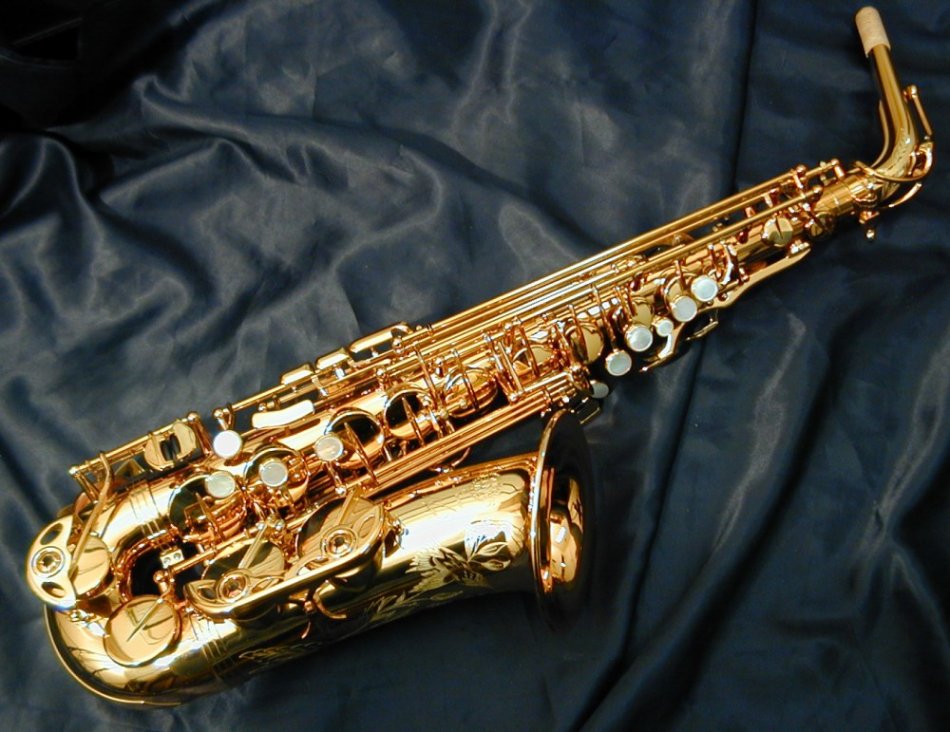
Saxophone Sheet Music
 "All the good music has already been written by people with wigs and stuff." Frank Zappa
Otis Redding
tis Ray Redding Jr. (September 9, 1941 – December 10, 1967) was an American singer and songwriter. He is considered one of the greatest singers in the history of American popular music and a seminal artist in soul music and rhythm and blues. Redding's style of singing gained inspiration from the gospel music that preceded the genre. His singing style influenced many other soul artists of the 1960s.
NINOS S GERASIMOS
Ninos S Gerasimos composes music for symphonic orchestra and marching band. He is military proffesional musician and he is certificated on harmony of the music , instrumentation and music conductor. He is from Greece and has borned on octomber of 1974. He plays the violin, the piano and the tuba !
John Coltrane
John William "Trane" Coltrane (September 23, 1926 – July 17, 1967) was an American jazz saxophonist and composer.
Working in the bebop and hard bop idioms early in his career, Coltrane helped pioneer the use of modes in jazz and later was at the forefront of free jazz. He was prolific, making about fifty recordings as a leader during his recording career, and appeared as a sideman on many other albums, notably with trumpeter Miles Davis and pianist Thelonious Monk. As his career progressed, Coltrane's music took on an increasingly spiritual dimension. His second wife was pianist Alice Coltrane, and their son Ravi Coltrane is also a saxophonist.
He influenced innumerable musicians, and remains one of the most significant tenor saxophonists in jazz history. He received many awards, among them a posthumous Special Citation from the Pulitzer Prize Board in 2007 for his "masterful improvisation, supreme musicianship and iconic centrality to the history of jazz."
Working in the bebop and hard bop idioms early in his career, Coltrane helped pioneer the use of modes in jazz and later was at the forefront of free jazz. He was prolific, making about fifty recordings as a leader during his recording career, and appeared as a sideman on many other albums, notably with trumpeter Miles Davis and pianist Thelonious Monk. As his career progressed, Coltrane's music took on an increasingly spiritual dimension. His second wife was pianist Alice Coltrane, and their son Ravi Coltrane is also a saxophonist.
He influenced innumerable musicians, and remains one of the most significant tenor saxophonists in jazz history. He received many awards, among them a posthumous Special Citation from the Pulitzer Prize Board in 2007 for his "masterful improvisation, supreme musicianship and iconic centrality to the history of jazz."
Steve Swallow
Steve Swallow (born October 4, 1940) is a jazz fusion bassist and composer noted for his collaborations with Jimmy Giuffre, Gary Burton, and Carla Bley. He was one of the first jazz double bassists to switch entirely to electric bass guitar.
Charles Mingus
Charles Mingus Jr. (April 22, 1922 – January 5, 1979) was an American jazz double bassist, pianist, composer and bandleader. A major proponent of collective improvisation, he is considered to be one of the greatest jazz musicians and composers in history, with a career spanning three decades and collaborations with other jazz legends such as Louis Armstrong, Duke Ellington, Charlie Parker, Dizzy Gillespie, Dannie Richmond, and Herbie Hancock.
Mingus' compositions continue to be played by contemporary musicians ranging from the repertory bands Mingus Big Band, Mingus Dynasty, and Mingus Orchestra, to the high school students who play the charts and compete in the Charles Mingus High School Competition. In 1993, the Library of Congress acquired Mingus's collected papers—including scores, sound recordings, correspondence and photos—in what they described as "the most important acquisition of a manuscript collection relating to jazz in the Library's history"
Mingus' compositions continue to be played by contemporary musicians ranging from the repertory bands Mingus Big Band, Mingus Dynasty, and Mingus Orchestra, to the high school students who play the charts and compete in the Charles Mingus High School Competition. In 1993, the Library of Congress acquired Mingus's collected papers—including scores, sound recordings, correspondence and photos—in what they described as "the most important acquisition of a manuscript collection relating to jazz in the Library's history"
Alain Clarke
Alain Clark Dutch musician Alain Clark is a Dutch musician and producer. Wikipedia Born: June 4, 1979 (age 42 years), Haarlem, Netherlands Parents: Dane Clark Children: Nilo Clark Songs Father and Friend Live It Out · 2007 Blow Me Away
Live It Out · 2007 Change Will Come Walk With Me · 2014
Live It Out · 2007 Change Will Come Walk With Me · 2014
Herbie Hancock
Herbert Jeffrey "Herbie" Hancock (born April 12, 1940) is an American pianist and composer. He is regarded not only as one of the greatest living jazz musicians, but also as one of the most influential jazz musicians of the 20th century. His music embraces elements of funk and soul while adopting freer stylistic elements from jazz. In his jazz improvisation, he possesses a unique creative blend of jazz, blues, and modern classical music, with harmonic stylings much like the styles of Claude Debussy and Maurice Ravel.
As part of Miles Davis's "second great quintet," Hancock helped redefine the role of a jazz rhythm section, and was one of the primary architects of the "post-bop" sound. Later, he was one of the first jazz musicians to embrace synthesizers and funk. Hancock's music is often melodic and accessible; he has had many songs "cross over" and achieved success among pop audiences.
Herbie's best-known solo works include "Cantaloupe Island," "Watermelon Man" (later performed by dozens of musicians, including bandleader Mongo Santamaria), "Maiden Voyage," "Chameleon," and the singles " I Thought It Was You" and "Rockit." His 2007 tribute album "River: The Joni Letters" won the 2007 Grammy Award for Album of the Year, only the second jazz album ever to win the award after 1965's Getz/Gilberto.
He is an adherent of the Nichiren school of Mahayana Buddhism.
As part of Miles Davis's "second great quintet," Hancock helped redefine the role of a jazz rhythm section, and was one of the primary architects of the "post-bop" sound. Later, he was one of the first jazz musicians to embrace synthesizers and funk. Hancock's music is often melodic and accessible; he has had many songs "cross over" and achieved success among pop audiences.
Herbie's best-known solo works include "Cantaloupe Island," "Watermelon Man" (later performed by dozens of musicians, including bandleader Mongo Santamaria), "Maiden Voyage," "Chameleon," and the singles " I Thought It Was You" and "Rockit." His 2007 tribute album "River: The Joni Letters" won the 2007 Grammy Award for Album of the Year, only the second jazz album ever to win the award after 1965's Getz/Gilberto.
He is an adherent of the Nichiren school of Mahayana Buddhism.
Caro Emerald
Caroline Esmeralda van der Leeuw (born 26 April 1981), known by her stage name Caro Emerald, is a Dutch pop and jazz singer who mainly performs in English. Active since 2007, she rose to prominence in 2009 with her debut single, "Back It Up". Her follow-up single "A Night Like This" topped charts in the Netherlands. Emerald is often praised for her outstanding live performances.
Cascada
Cascada is a German Eurodance act most famous for their hit singles "Everytime We Touch" and "What Hurts The Most". Cascada consists of singer Natalie Horler, and producers DJ Manian and Yanou.
When Natalie Horler was 17, she was doing studio work for various DJs. Eventually; she met Yann Pfeiffer (stagename Yanou) and Manuel Reuter (stagename DJ Manian). Originally, they released music under the name Cascade, but due to another artist with a similar name threatening a suit, they changed it to Cascada. Under Andorfine Records, they produced their debut and hit single, "Miracle", and its follow-up, "Bad Boy", in Germany. This caught the attention of American dance label, Robbins Entertainment. They negotiated a contract and "Miracle" was released in 2004.
When Natalie Horler was 17, she was doing studio work for various DJs. Eventually; she met Yann Pfeiffer (stagename Yanou) and Manuel Reuter (stagename DJ Manian). Originally, they released music under the name Cascade, but due to another artist with a similar name threatening a suit, they changed it to Cascada. Under Andorfine Records, they produced their debut and hit single, "Miracle", and its follow-up, "Bad Boy", in Germany. This caught the attention of American dance label, Robbins Entertainment. They negotiated a contract and "Miracle" was released in 2004.
Don Grolnick
Don Grolnick (September 23, 1947 – June 1, 1996) was an American jazz pianist, composer, and record producer. He was a member of the groups Steps Ahead and Dreams, both with Michael Brecker, and played often with the Brecker Brothers. As a session musician, he recorded with John Scofield, Billy Cobham, Roberta Flack, Harry Chapin, Dave Holland, Bette Midler, Marcus Miller, Bob Mintzer, Linda Ronstadt, David Sanborn, Carly Simon, J. D. Souther, Steely Dan, and James Taylor.
Sonny Rollins
Theodore Walter Sonny" Rollins, American jazz tenor saxophonist. It is considered one of the living jazz legends. Many of his compositions, "St. Thomas", "Oleo", "Doxy", and "Airegin", are among the jazz standards.
Pierre Vellones
Pierre Vellones, pseudonyme de Pierre Édouard Léon Rousseau, est un compositeur français né à Paris le 29 mars 18891 et mort à Paris le 17 juillet 1939.Pierre Rousseau grandit au sein d’un foyer cultivant les arts et pratiquant la musique en famille. Comme son cousin Scellier de Gisors (architecte, prix de Rome), il possède un beau coup de crayon. Lorsque ses parents l’emmènent à l’Opéra assister à une représentation de Tannhäuser, c’est la révélation. Il est alors élève au Collège Stanislas.
ABBA
ABBA was a Swedish Eurovision Song Contest-winning pop music group active between 1972 and 1982. Benny Andersson, Björn Ulvaeus, Anni-Frid Lyngstad (Frida), Agnetha Fältskog are in ABBA. They topped the charts worldwide from the mid-1970s to the early 1980s. The name "ABBA" is an acronym formed from the first letters of each of the group member's given name (Agnetha, Björn, Benny, Anni-Frid).
ABBA gained immense international popularity employing catchy song hooks, simple lyrics, and a Wall of Sound achieved by overdubbing the female singers' voices in multiple harmonies. As their popularity grew, they were sought-after to tour Europe, Australia, and North America, drawing crowds of near-hysterical fans ("ABBAholics"), notably in Australia. Touring became a contentious issue, being particularly unpopular with Agnetha, but they continued to release studio albums to great commercial success. At the height of their popularity, however, both marriages of the band members (Benny with Frida, and Björn with Agnetha) failed, and the relationship changes were reflected in their music, as they produced more thoughtful lyrics with different compositions.
They remain a fixture of radio playlists and are one of the world's best selling bands, having sold around 400 million records world wide; The music of ABBA has been re-arranged into the successful musical Mamma Mia! that has toured worldwide and a movie version was released in July 2008. All four of the former members of ABBA were present at the Stockholm premieres of both the musical (2005) and the film (2008). The film première took place at the Benny Andersson-owned Rival theatre at Mariatorget, Stockholm on 4 July 2008.
ABBA gained immense international popularity employing catchy song hooks, simple lyrics, and a Wall of Sound achieved by overdubbing the female singers' voices in multiple harmonies. As their popularity grew, they were sought-after to tour Europe, Australia, and North America, drawing crowds of near-hysterical fans ("ABBAholics"), notably in Australia. Touring became a contentious issue, being particularly unpopular with Agnetha, but they continued to release studio albums to great commercial success. At the height of their popularity, however, both marriages of the band members (Benny with Frida, and Björn with Agnetha) failed, and the relationship changes were reflected in their music, as they produced more thoughtful lyrics with different compositions.
They remain a fixture of radio playlists and are one of the world's best selling bands, having sold around 400 million records world wide; The music of ABBA has been re-arranged into the successful musical Mamma Mia! that has toured worldwide and a movie version was released in July 2008. All four of the former members of ABBA were present at the Stockholm premieres of both the musical (2005) and the film (2008). The film première took place at the Benny Andersson-owned Rival theatre at Mariatorget, Stockholm on 4 July 2008.
Wedding Collection
Piano Solo Songbook Piano solo arrangements of 25 classical favorites for weddings. Includes: Air on the G String * Bridal Chorus * Canon in D * Jesu, Joy of Man's Desiring * Ode to Joy * Rondeau * Sheep May Safely Graze * Trumpet Voluntary * Wedding March * more.
Pharrell Williams
Pharrell Lanscilo Williams (/fəˈrɛl/; born April 5, 1973) is an American singer, rapper, songwriter, record producer, fashion designer, and entrepreneur. Williams and Chad Hugo formed the record production duo The Neptunes in 1994, producing hip hop and R&B music. He is the lead vocalist of the band N*E*R*D, which he formed with Hugo and childhood friend Shay Haley. Williams also owns I Am Other, a multimedia creative collective that serves as an umbrella for all of Pharrell Williams' endeavors, including Billionaire Boys Club.
Isham Jones
Isham Edgar Jones (January 31, 1894 – October 19, 1956) was an American bandleader, saxophonist, bassist and songwriter.Jones was born in Coalton, Ohio, United States, to a musical and mining family. His father, Richard Isham Jones (1865–1945), was a violinist. The family moved to Saginaw, Michigan, where Jones grew up and started his first ensemble for church concerts. In 1911 one of Jones's earliest compositions "On the Alamo" was published by Tell Taylor Inc. (Taylor had formed a publishing company the year before when his song "Down by the Old Mill Stream" became a hit.)
Gustav Holst
Gustav Theodore Holst (21 September 1874 – 25 May 1934) was an English composer and was a music teacher for nearly 20 years. He is most famous for his orchestral suite The Planets. Having studied at the Royal College of Music in London, his early work was influenced by Ravel, Grieg, Richard Strauss, and fellow student Ralph Vaughan Williams, but most of his music is highly original, with influences from Hindu spiritualism and English folk tunes. Holst's music is well known for unconventional use of metre and haunting melodies.
Holst wrote almost 200 catalogued compositions, including orchestral suites, operas, ballets, concertos, choral hymns, and songs (see Selected works below).
Holst became music master at St Paul's Girls' School in 1905 and director of music at Morley College in 1907, continuing in both posts until retirement.
He was the brother of Hollywood actor Ernest Cossart and father of the composer and conductor Imogen Holst, who wrote a biography of him in 1938.
Holst wrote almost 200 catalogued compositions, including orchestral suites, operas, ballets, concertos, choral hymns, and songs (see Selected works below).
Holst became music master at St Paul's Girls' School in 1905 and director of music at Morley College in 1907, continuing in both posts until retirement.
He was the brother of Hollywood actor Ernest Cossart and father of the composer and conductor Imogen Holst, who wrote a biography of him in 1938.
Charlie Parker
Charles Parker, Jr. (August 29, 1920 – March 12, 1955), famously called Bird or Yardbird, was an American jazz saxophonist and composer.
Parker, with Louis Armstrong and Duke Ellington, is widely considered to have been one of the most influential jazz musicians. Parker acquired the nickname "Yardbird" early in his career, and the shortened form "Bird" remained Parker's sobriquet for the rest of his life, inspiring the titles of a number of Parker compositions, such as "Yardbird Suite", "Ornithology" and "Bird of Paradise."
Parker played a leading role in the development of bebop, a form of jazz characterized by fast tempos, virtuoso technique, and improvisation based on harmonic structure. Parker's innovative approaches to melody, rhythm, and harmony exercised enormous influence on his contemporaries. Several of Parker's songs have become standards, including "Billie's Bounce", "Anthropology", "Ornithology", and "Confirmation". He introduced revolutionary harmonic ideas including a tonal vocabulary employing 9ths, 11ths and 13ths of chords, rapidly implied passing chords, and new variants of altered chords and chord substitutions. His tone was clean and penetrating, but sweet and plaintive on ballads. Although many Parker recordings demonstrate dazzling virtuosic technique and complex melodic lines – such as "Ko-Ko", "Kim", and "Leap Frog" – he was also one of the great blues players. His themeless blues improvisation "Parker's Mood" represents one of the most deeply affecting recordings in jazz. At various times, Parker fused jazz with other musical styles, from classical to Latin music, blazing paths followed later by others.
Parker, with Louis Armstrong and Duke Ellington, is widely considered to have been one of the most influential jazz musicians. Parker acquired the nickname "Yardbird" early in his career, and the shortened form "Bird" remained Parker's sobriquet for the rest of his life, inspiring the titles of a number of Parker compositions, such as "Yardbird Suite", "Ornithology" and "Bird of Paradise."
Parker played a leading role in the development of bebop, a form of jazz characterized by fast tempos, virtuoso technique, and improvisation based on harmonic structure. Parker's innovative approaches to melody, rhythm, and harmony exercised enormous influence on his contemporaries. Several of Parker's songs have become standards, including "Billie's Bounce", "Anthropology", "Ornithology", and "Confirmation". He introduced revolutionary harmonic ideas including a tonal vocabulary employing 9ths, 11ths and 13ths of chords, rapidly implied passing chords, and new variants of altered chords and chord substitutions. His tone was clean and penetrating, but sweet and plaintive on ballads. Although many Parker recordings demonstrate dazzling virtuosic technique and complex melodic lines – such as "Ko-Ko", "Kim", and "Leap Frog" – he was also one of the great blues players. His themeless blues improvisation "Parker's Mood" represents one of the most deeply affecting recordings in jazz. At various times, Parker fused jazz with other musical styles, from classical to Latin music, blazing paths followed later by others.
E.Y. Harburg
Edgar Yipsel Harburg (born Isidore Hochberg; April 8, 1896 – March 5, 1981) was an American popular song lyricist and librettist who worked with many well-known composers. He wrote the lyrics to the standards "Brother, Can You Spare a Dime?" (with Jay Gorney), "April in Paris", and "It's Only a Paper Moon", as well as all of the songs for the film The Wizard of Oz, including "Over the Rainbow". He was known for the social commentary of his lyrics, as well as his liberal sensibilities. He championed racial and gender equality and union politics. He also was an ardent critic of religion.
Matt Amy
Matt Amy is an arranger, composer, orchestrator, trombonist and musical director based in Melbourne, Australia. Matt has worked in nearly every medium and his arrangements have been performed by Ronan Keating, Melanie C, David Hobson, Vanessa Amerosi, Scared Weird Little Guys, Marina Prior, Anthony Callea, Guy Sebastian, Landau Eugene Murphy Jr., Auckland Philharmonia, Istanbul Symphony, Melbourne Symphony, Sydney Symphony and the Australian Philharmonic Orchestra.
Stan Getz
Stan Getz was an American jazz saxophonist. Playing primarily the tenor saxophone, Getz was known as "The Sound" because of his warm, lyrical tone, his prime influence being the wispy, mellow timbre of his idol, Lester Young.
Branford marsalis
Branford Marsalis, D.Mus., American jazz saxophonist, composer. His professional career began in the early 1980s with Blakey's Jazz Messengers, Clark Terry and Art Blakey's big band. Between 1982-1985 he played in his brother Wynton's band. He then left to play on Sting's Backup Band
Franz Schubert
Franz Peter Schubert (German pronunciation: ; January 31, 1797 – November 19, 1828) was an Austrian composer. He wrote some 600 Lieder, nine symphonies (including the famous "Unfinished Symphony"), liturgical music, operas, some incidental music, and a large body of chamber and solo piano music. He is particularly noted for his original melodic and harmonic writing.
Schubert was born into a musical family, and received formal musical training through much of his childhood. While Schubert had a close circle of friends and associates who admired his work (amongst them the prominent singer Johann Michael Vogl), wide appreciation of his music during his lifetime was limited at best. He was never able to secure adequate permanent employment, and for most of his career he relied on the support of friends and family. He made some money from published works, and occasionally gave private musical instruction. In the last year of his life he began to receive wider acclaim. He died at the age of 31 of "typhoid fever", a diagnosis which was vague at the time; several scholars suspect the real illness was tertiary syphilis.
Interest in Schubert's work increased dramatically in the decades following his death. Composers like Franz Liszt, Robert Schumann and Felix Mendelssohn discovered, collected, and championed his works in the 19th century, as did musicologist Sir George Grove. Franz Schubert is now widely considered to be one of the greatest composers in the Western tradition.
Schubert was born into a musical family, and received formal musical training through much of his childhood. While Schubert had a close circle of friends and associates who admired his work (amongst them the prominent singer Johann Michael Vogl), wide appreciation of his music during his lifetime was limited at best. He was never able to secure adequate permanent employment, and for most of his career he relied on the support of friends and family. He made some money from published works, and occasionally gave private musical instruction. In the last year of his life he began to receive wider acclaim. He died at the age of 31 of "typhoid fever", a diagnosis which was vague at the time; several scholars suspect the real illness was tertiary syphilis.
Interest in Schubert's work increased dramatically in the decades following his death. Composers like Franz Liszt, Robert Schumann and Felix Mendelssohn discovered, collected, and championed his works in the 19th century, as did musicologist Sir George Grove. Franz Schubert is now widely considered to be one of the greatest composers in the Western tradition.
James Brown
James Joseph Brown, Jr. (May 3, 1933 – December 25, 2006), commonly referred to as "The Godfather of Soul", "King of Funk", and "The Hardest Working Man in Show Business", was an American entertainer. He is recognized as one of the most influential figures in 20th century popular music and was renowned for his vocals, and feverish dancing.
As a prolific singer, songwriter, bandleader, Brown was a pivotal force in the music industry. He left his mark on numerous artists. Brown's music also left its mark on the rhythms of African popular music, such as afrobeat, jùjú and mbalax, and provided a template for go-go music.
Brown began his professional music career in 1953, and rose to fame during the late 1950s and early 1960s on the strength of his thrilling live performances and string of smash hits. In spite of various personal problems and setbacks he continued to score hits in every decade through the 1980s. In addition to his acclaim in music, Brown was a presence in American political affairs during the 1960s and 1970s, noted especially for his activism on behalf of fellow African Americans and the poor. During the early 1980s, Brown's music helped to shape the rhythms of early hip-hop music, with numerous groups looping or sampling his funk grooves and turning them into what became hip hop classics and the foundations of the music genre.
Brown was recognized by numerous titles, including Soul Brother Number One, Sex Machine, Mr. Dynamite, The Hardest Working Man in Show Business, Minister of The New New Super Heavy Funk, Mr. Please Please Please, The Boss, and the best-known, the Godfather of Soul.
As a prolific singer, songwriter, bandleader, Brown was a pivotal force in the music industry. He left his mark on numerous artists. Brown's music also left its mark on the rhythms of African popular music, such as afrobeat, jùjú and mbalax, and provided a template for go-go music.
Brown began his professional music career in 1953, and rose to fame during the late 1950s and early 1960s on the strength of his thrilling live performances and string of smash hits. In spite of various personal problems and setbacks he continued to score hits in every decade through the 1980s. In addition to his acclaim in music, Brown was a presence in American political affairs during the 1960s and 1970s, noted especially for his activism on behalf of fellow African Americans and the poor. During the early 1980s, Brown's music helped to shape the rhythms of early hip-hop music, with numerous groups looping or sampling his funk grooves and turning them into what became hip hop classics and the foundations of the music genre.
Brown was recognized by numerous titles, including Soul Brother Number One, Sex Machine, Mr. Dynamite, The Hardest Working Man in Show Business, Minister of The New New Super Heavy Funk, Mr. Please Please Please, The Boss, and the best-known, the Godfather of Soul.
Andre Popp
André Charles Jean Popp (born 19 February 1924) is a French composer, arranger and screenwriter.
Born in Fontenay-le-Comte, Vendée, he started his career as a church organist, filling the place of his father who had been called up to serve in World War II in 1939. Popp studied music at the Saint Joseph Institute. In the 1960s, he co-wrote (with Pierre Cour) two songs for the Eurovision Song Contest — Tom Pillibi, which won the competition for France in 1960, and L'amour est bleu (Love is Blue) which came fourth for Luxembourg in 1967, but which later became a Number one hit in the US for Paul Mauriat. During this time he was the arranger for many top French singers such as Juliette Greco. He worked for many years for French radio.
Popp is the composer of Piccolo, Sax and Co, a musical tale for children intended as a guide to the instruments of the orchestra and the rudiments of harmony.
In 1957, Popp released Delirium in Hi-Fi (originally titled Elsa Popping et sa musique sidérante), a collaboration with Pierre Fatosme, an experiment in the recording techniques of the time.
André Popp has been an inspiration for newer French composers such as Fred Pallem.
Born in Fontenay-le-Comte, Vendée, he started his career as a church organist, filling the place of his father who had been called up to serve in World War II in 1939. Popp studied music at the Saint Joseph Institute. In the 1960s, he co-wrote (with Pierre Cour) two songs for the Eurovision Song Contest — Tom Pillibi, which won the competition for France in 1960, and L'amour est bleu (Love is Blue) which came fourth for Luxembourg in 1967, but which later became a Number one hit in the US for Paul Mauriat. During this time he was the arranger for many top French singers such as Juliette Greco. He worked for many years for French radio.
Popp is the composer of Piccolo, Sax and Co, a musical tale for children intended as a guide to the instruments of the orchestra and the rudiments of harmony.
In 1957, Popp released Delirium in Hi-Fi (originally titled Elsa Popping et sa musique sidérante), a collaboration with Pierre Fatosme, an experiment in the recording techniques of the time.
André Popp has been an inspiration for newer French composers such as Fred Pallem.
AC/DC
AC/DC are an Australian rock band formed in 1973 by brothers Malcolm and Angus Young. Although the band are commonly classified as hard rock and are considered a pioneer of heavy metal, they have always classified their music as rock and roll.
AC/DC underwent several line-up changes before releasing their first album, High Voltage, in 1975. Membership remained stable until bassist Mark Evans was replaced by Cliff Williams in 1977. The band recorded their highly successful album Highway to Hell in 1979. Lead singer and co-songwriter Bon Scott died on 19 February 1980, after a night of heavy alcohol consumption. The group briefly considered disbanding, but soon ex-Geordie singer Brian Johnson was selected to replace Scott. Later that year, the band released their best-selling album, Back in Black.
The band's next album, For Those About to Rock We Salute You, was their first album to reach number one in the United States. AC/DC declined in popularity soon after drummer Phil Rudd was fired in 1983 and was replaced by future Dio drummer Simon Wright, though the band resurged in the early 1990s with the release of The Razor's Edge. Phil Rudd returned in 1994 (after Chris Slade was asked to leave in favour of him) and contributed to the band's 1995 album Ballbreaker. Stiff Upper Lip was released in 2000 and was well received by critics. The band's most recent album, Black Ice, was released on 20 October 2008.
As of 2008, AC/DC have sold more than 200 million albums worldwide, including 71 million albums in the United States. Back in Black has sold an estimated 45 million units worldwide, making it the highest-selling album by any band and the 2nd highest-selling album in history, behind "Thriller" by Michael Jackson. The album has sold 22 million in the US alone, where it is the fifth-highest-selling album. AC/DC ranked fourth on VH1's list of the "100 Greatest Artists of Hard Rock" and was named the seventh "Greatest Heavy Metal Band of All Time" by MTV. In 2004, the band was ranked number 72 in the Rolling Stone list of the "100 Greatest Artists of All Time".
AC/DC underwent several line-up changes before releasing their first album, High Voltage, in 1975. Membership remained stable until bassist Mark Evans was replaced by Cliff Williams in 1977. The band recorded their highly successful album Highway to Hell in 1979. Lead singer and co-songwriter Bon Scott died on 19 February 1980, after a night of heavy alcohol consumption. The group briefly considered disbanding, but soon ex-Geordie singer Brian Johnson was selected to replace Scott. Later that year, the band released their best-selling album, Back in Black.
The band's next album, For Those About to Rock We Salute You, was their first album to reach number one in the United States. AC/DC declined in popularity soon after drummer Phil Rudd was fired in 1983 and was replaced by future Dio drummer Simon Wright, though the band resurged in the early 1990s with the release of The Razor's Edge. Phil Rudd returned in 1994 (after Chris Slade was asked to leave in favour of him) and contributed to the band's 1995 album Ballbreaker. Stiff Upper Lip was released in 2000 and was well received by critics. The band's most recent album, Black Ice, was released on 20 October 2008.
As of 2008, AC/DC have sold more than 200 million albums worldwide, including 71 million albums in the United States. Back in Black has sold an estimated 45 million units worldwide, making it the highest-selling album by any band and the 2nd highest-selling album in history, behind "Thriller" by Michael Jackson. The album has sold 22 million in the US alone, where it is the fifth-highest-selling album. AC/DC ranked fourth on VH1's list of the "100 Greatest Artists of Hard Rock" and was named the seventh "Greatest Heavy Metal Band of All Time" by MTV. In 2004, the band was ranked number 72 in the Rolling Stone list of the "100 Greatest Artists of All Time".
George Gershwin
George Gershwin (September 26, 1898 – July 11, 1937) was an American composer. He wrote most of his vocal and theatrical works in collaboration with his elder brother, lyricist Ira Gershwin. George Gershwin composed songs both for Broadway and for the classical concert hall. He also wrote popular songs with success.
Many of his compositions have been used on television and in numerous films, and many became jazz standards. The jazz singer Ella Fitzgerald recorded many of the Gershwins' songs on her 1959 Gershwin Songbook (arranged by Nelson Riddle). Countless singers and musicians have recorded Gershwin songs, including Fred Astaire, Louis Armstrong, Al Jolson, Bobby Darin, Art Tatum, Bing Crosby, Janis Joplin, John Coltrane, Frank Sinatra, Billie Holiday, Sam Cooke, Miles Davis, Herbie Hancock, Madonna, Judy Garland, Julie Andrews, Barbra Streisand, Marni Nixon, Natalie Cole, Patti Austin, Nina Simone, Maureen McGovern, John Fahey, The Residents, Than & Sam, Sublime, and Sting. A residential building is named after him on the Stony Brook University campus.
Many of his compositions have been used on television and in numerous films, and many became jazz standards. The jazz singer Ella Fitzgerald recorded many of the Gershwins' songs on her 1959 Gershwin Songbook (arranged by Nelson Riddle). Countless singers and musicians have recorded Gershwin songs, including Fred Astaire, Louis Armstrong, Al Jolson, Bobby Darin, Art Tatum, Bing Crosby, Janis Joplin, John Coltrane, Frank Sinatra, Billie Holiday, Sam Cooke, Miles Davis, Herbie Hancock, Madonna, Judy Garland, Julie Andrews, Barbra Streisand, Marni Nixon, Natalie Cole, Patti Austin, Nina Simone, Maureen McGovern, John Fahey, The Residents, Than & Sam, Sublime, and Sting. A residential building is named after him on the Stony Brook University campus.
Glenn Miller
Alton Glenn Miller (March 1, 1904–presumably December 15, 1944), was an American jazz musician and band leader in the swing era. He was one of the best-selling recording artists from 1939 to 1942, leading one of the best known "Big Bands". Miller's signature recordings include, "In the Mood", "Tuxedo Junction", "Chattanooga Choo Choo", "Moonlight Serenade", "Little Brown Jug", and "Pennsylvania 6-5000". While travelling to entertain U.S. troops in France during World War II, Miller's plane disappeared in bad weather. His body was never found.
The Glenn Miller Orchestra is still performing today under the direction of Larry O'Brien. Glenn once said, "A band ought to have a sound all of its own. It ought to have a personality." His band certainly had their own sound, and it is a sound that is still popular after over fifty years.
The Glenn Miller Orchestra is still performing today under the direction of Larry O'Brien. Glenn once said, "A band ought to have a sound all of its own. It ought to have a personality." His band certainly had their own sound, and it is a sound that is still popular after over fifty years.
Gruber, Franz Xaver
Franz Xaver Gruber (25 November 1787 – 7 June 1863), was an Austrian primary school teacher, church organist and composer in the village of Arnsdorf, who is best known for composing the music to "Stille Nacht" ("Silent Night").
Contents
1 Life
2 "Silent Night"
3 Family
4 References
5 External links
Life
Gruber was born on 25 November 1787 in the village of Hochburg-Ach, Upper Austria, the son of linen weavers, Josef and Maria Gruber. His given name was recorded in the baptismal record as "Conrad Xavier," but this was later changed to "Franz Xaver". The Hochburger schoolteacher Andreas Peterlechner gave him music lessons.
Gruber taught at the primary school in Arnsdorf
Portrait in the Silent Night Chapel in Oberndorf bei Salzburg
Silent Night
Choral version by United States Army Chorus
Problems playing this file? See media help.
Gruber worked as a weaver until the age of 18, then trained to become a schoolteacher. He completed his music education studying with the church organist of Burghausen, Georg Hartdobler. In 1807 Gruber became a schoolteacher in Arnsdorf. He also became the church caretaker and organist. In 1808 he married a widow, Maria Elisabeth Fischinger Engelsberger. They had two children, both of whom died young. After the death of his first wife in 1825, Gruber married a former student, Maria Breitfuss. They had ten children, four of whom survived to adulthood. In 1829 Gruber moved to Berndorf, and in later years to Hallein, Salzburg, where he was named choir director, singer and organist.
Maria Gruber died in childbirth in 1841. The following year he married Katherine Wimmer.
Contents
1 Life
2 "Silent Night"
3 Family
4 References
5 External links
Life
Gruber was born on 25 November 1787 in the village of Hochburg-Ach, Upper Austria, the son of linen weavers, Josef and Maria Gruber. His given name was recorded in the baptismal record as "Conrad Xavier," but this was later changed to "Franz Xaver". The Hochburger schoolteacher Andreas Peterlechner gave him music lessons.
Gruber taught at the primary school in Arnsdorf
Portrait in the Silent Night Chapel in Oberndorf bei Salzburg
Silent Night
Choral version by United States Army Chorus
Problems playing this file? See media help.
Gruber worked as a weaver until the age of 18, then trained to become a schoolteacher. He completed his music education studying with the church organist of Burghausen, Georg Hartdobler. In 1807 Gruber became a schoolteacher in Arnsdorf. He also became the church caretaker and organist. In 1808 he married a widow, Maria Elisabeth Fischinger Engelsberger. They had two children, both of whom died young. After the death of his first wife in 1825, Gruber married a former student, Maria Breitfuss. They had ten children, four of whom survived to adulthood. In 1829 Gruber moved to Berndorf, and in later years to Hallein, Salzburg, where he was named choir director, singer and organist.
Maria Gruber died in childbirth in 1841. The following year he married Katherine Wimmer.
Bob mintzer
Robert Alan Mintzer is an American jazz saxophonist, composer, arranger, and big band leader. Date of birth: January 27, 1953 (66 years old), New Rochelle, New York, United States Music groups: Yellowjackets (since 1991), Yellowjackets, GRP All-Star Big Band Education: The Hartt School, Manhattan School of Music, Interlochen Center for the Arts Awards: American Independent Music Award for Best Instrumental Jazz Song
Clark Murray
Clark Murray (born 1938) is an American sculptor who is best known for his large outdoor constructions of welded and painted steel pipes.Sculptures by Clark Murray include:White Mountains, a 1977 three-ton welded steel pipe sculpture was on loan for a brief time beginning in 1982 at the Laumeier Sculpture Park (St. Louis, Missouri. Its current location is unknown.A 1973 untitled painted steel pipe sculpture at the University of St. Thomas (Houston, Texas) owned by the Menil CollectionA 1974-5 untitled painted steel sculpture at the Museum of Fine Arts, Houston (Houston, Texas)
Horace Silver
Horace Ward Martin Tavares Silver was an American jazz pianist, composer, and arranger, particularly in the hard bop style that he helped pioneer in the 1950s. After playing tenor saxophone and piano at school in Connecticut, Silver got his break on piano when his trio was recruited by Stan Getz in 1950.
Frank Mantooth
Frank Mantooth (April 11, 1947, Tulsa, Oklahoma - January 30, 2004, Garden City, Kansas) was an American jazz pianist and arranger.
Mantooth attended University of North Texas College of Music, graduating in 1969, then played in and arranged for the Air Force Academy Falconaires from 1969 to 1973. He spent the rest of the 1970s living in Austria, where he published big band and small ensemble arrangements.
After his return to the U.S. in 1980, Mantooth worked extensively as a pedagogue, arranger, and publisher in addition to performance. He taught at DePaul University and recorded with Phil Wilson, Ashley Alexander, and Kirsten Gustafson. He wrote music for Louie Bellson, Art Farmer, and Carla Helmbrecht among others. He died at age 56 in 2004.
Mantooth attended University of North Texas College of Music, graduating in 1969, then played in and arranged for the Air Force Academy Falconaires from 1969 to 1973. He spent the rest of the 1970s living in Austria, where he published big band and small ensemble arrangements.
After his return to the U.S. in 1980, Mantooth worked extensively as a pedagogue, arranger, and publisher in addition to performance. He taught at DePaul University and recorded with Phil Wilson, Ashley Alexander, and Kirsten Gustafson. He wrote music for Louie Bellson, Art Farmer, and Carla Helmbrecht among others. He died at age 56 in 2004.
Jamey Aebersold
Jamey Aebersold (born July 21, 1939 in New Albany, Indiana) is an American jazz saxophonist and music educator. His "Play-A-Long" series of instructional book and CD collections, using the chord-scale system, the first of which was released in 1967, are an internationally renowned resource for jazz education. As of 2009, 126 of these collections have been published by Aebersold, who currently teaches musical improvisation at the University of Louisville. He is also an adept pianist, bassist, and banjoist.
Joe Zawinul
Josef Erich Zawinul (July 7, 1932 – September 11, 2007) was an Austrian jazz keyboardist and composer.
First coming to prominence with saxophonist Cannonball Adderley, Zawinul went on to play with trumpeter Miles Davis, and to become one of the creators of jazz fusion, an innovative musical genre that combined jazz with elements of rock and world music. Later, Zawinul co-founded the groups Weather Report and the world fusion music oriented Zawinul Syndicate. Additionally, he made pioneering use of electric piano and synthesizers. Zawinul won the "Best Keyboardist" award 30 times from American jazz magazine Down Beat's critics' poll.
Several artists have honored Zawinul with songs, notably Brian Eno's instrumental "Zawinul/Lava", John McLaughlin's instrumental "Jozy", Warren Cuccurullo's "Hey Zawinul", Bob Baldwin's "Joe Zawinul", and Biréli Lagrène's instrumental "Josef". Zawinul's playing style is often dominated by quirky melodic improvisations —both bebop, ethnic and pop sounding— combined with sparse but rhythmic playing of big-band sounding chords or bass lines. In Weather Report, he often employed a vocoder as well as pre-recorded sounds played (i.e filtered and transposed) through a synthesizer, creating a very distinctive, often beautiful, synthesis of jazz harmonics and "noise" ("using all the sounds the world generates"). Many considered Zawinul as the "best" synthesizer player "in jazz", frequently employing several keyboards with live settings of his bands.
First coming to prominence with saxophonist Cannonball Adderley, Zawinul went on to play with trumpeter Miles Davis, and to become one of the creators of jazz fusion, an innovative musical genre that combined jazz with elements of rock and world music. Later, Zawinul co-founded the groups Weather Report and the world fusion music oriented Zawinul Syndicate. Additionally, he made pioneering use of electric piano and synthesizers. Zawinul won the "Best Keyboardist" award 30 times from American jazz magazine Down Beat's critics' poll.
Several artists have honored Zawinul with songs, notably Brian Eno's instrumental "Zawinul/Lava", John McLaughlin's instrumental "Jozy", Warren Cuccurullo's "Hey Zawinul", Bob Baldwin's "Joe Zawinul", and Biréli Lagrène's instrumental "Josef". Zawinul's playing style is often dominated by quirky melodic improvisations —both bebop, ethnic and pop sounding— combined with sparse but rhythmic playing of big-band sounding chords or bass lines. In Weather Report, he often employed a vocoder as well as pre-recorded sounds played (i.e filtered and transposed) through a synthesizer, creating a very distinctive, often beautiful, synthesis of jazz harmonics and "noise" ("using all the sounds the world generates"). Many considered Zawinul as the "best" synthesizer player "in jazz", frequently employing several keyboards with live settings of his bands.
Bob Berg
Robert Berg (April 7, 1951 – December 5, 2002) was an American jazz saxophonist.Berg started his musical education at the age of six when he began studying classical piano. He began playing the saxophone at the age of thirteen. He studied at the High School of Performing Arts and Juilliard before leaving school to tour. Berg was influenced by the late 1964–67 period of John Coltrane's music.
Lee Morgan
Lee Morgan (July 10, 1938 – February 19, 1972) was an American jazz trumpeter and composer.
One of the key hard bop musicians of the 1960s, Morgan came to prominence in his late teens, recording on John Coltrane's Blue Train (1957) and with the band of drummer Art Blakey before launching a solo career. Morgan stayed with Blakey until 1961 and started to record as leader soon after. His song "The Sidewinder", on the album of the same name, became a surprise crossover hit on the pop and R&B charts in 1964, while Morgan's recordings found him touching on other styles of music as his artistry matured. Soon after The Sidewinder was released, Morgan rejoined Blakey for a short period. After leaving Blakey for the final time, Morgan continued to work prolifically as both a leader and a sideman with the likes of Hank Mobley and Wayne Shorter, becoming a cornerstone of the Blue Note label.
One of the key hard bop musicians of the 1960s, Morgan came to prominence in his late teens, recording on John Coltrane's Blue Train (1957) and with the band of drummer Art Blakey before launching a solo career. Morgan stayed with Blakey until 1961 and started to record as leader soon after. His song "The Sidewinder", on the album of the same name, became a surprise crossover hit on the pop and R&B charts in 1964, while Morgan's recordings found him touching on other styles of music as his artistry matured. Soon after The Sidewinder was released, Morgan rejoined Blakey for a short period. After leaving Blakey for the final time, Morgan continued to work prolifically as both a leader and a sideman with the likes of Hank Mobley and Wayne Shorter, becoming a cornerstone of the Blue Note label.
Joseph Kosma
Joseph Kosma was a Hungarian-French composer. Date of birth: October 22, 1905, Budapest, Hungary Date and place of death: August 7, 1969, France
Chucho Valdés
Jesús Valdés Rodríguez, better known as Chucho Valdés (born October 9, 1941), is a Cuban pianist, bandleader, composer and arranger whose career spans over 50 years. An original member of the Orquesta Cubana de Música Moderna, in 1973 he founded the group Irakere, one of Cuba's best-known Latin jazz bands. Both his father, Bebo Valdés, and his son, Chuchito, are pianists as well. As a solo artist, he has won four Grammy Awards and three Latin Grammy Awards.
Bach
Johann Sebastian Bach (31 March 1685 – 28 July 1750) was a German composer and organist whose sacred and secular works for choir, orchestra, and solo instruments drew together the strands of the Baroque period and brought it to its ultimate maturity. Although he introduced no new forms, he enriched the prevailing German style with a robust contrapuntal technique, an unrivalled control of harmonic and motivic organisation in composition for diverse musical forces, and the adaptation of rhythms and textures from abroad, particularly Italy and France.
Revered for their intellectual depth and technical and artistic beauty, Bach's works include the Brandenburg concertos; the Goldberg Variations; the English Suites, French Suites, Partitas, and Well-Tempered Clavier; the Mass in B Minor; the St. Matthew Passion; the St. John Passion; The Musical Offering; The Art of Fugue; the Sonatas and Partitas for violin solo; the Cello Suites; more than 200 surviving cantatas; and a similar number of organ works, including the celebrated Toccata and Fugue in D Minor.
While Bach's fame as an organist was great during his lifetime, he was not particularly well-known as a composer. His adherence to Baroque forms and contrapuntal style was considered "old-fashioned" by his contemporaries, especially late in his career when the musical fashion tended towards Rococo and later Classical styles. A revival of interest and performances of his music began early in the 19th century, and he is now widely considered to be one of the greatest composers in the Western tradition.
Revered for their intellectual depth and technical and artistic beauty, Bach's works include the Brandenburg concertos; the Goldberg Variations; the English Suites, French Suites, Partitas, and Well-Tempered Clavier; the Mass in B Minor; the St. Matthew Passion; the St. John Passion; The Musical Offering; The Art of Fugue; the Sonatas and Partitas for violin solo; the Cello Suites; more than 200 surviving cantatas; and a similar number of organ works, including the celebrated Toccata and Fugue in D Minor.
While Bach's fame as an organist was great during his lifetime, he was not particularly well-known as a composer. His adherence to Baroque forms and contrapuntal style was considered "old-fashioned" by his contemporaries, especially late in his career when the musical fashion tended towards Rococo and later Classical styles. A revival of interest and performances of his music began early in the 19th century, and he is now widely considered to be one of the greatest composers in the Western tradition.
Handel
George Frideric Handel (Friday, 23 February 1685 - Saturday, 14 April 1759) was a German-born Baroque composer who is famous for his operas, oratorios and concerti grossi. Born as Georg Friedrich Handel in Halle, he spent most of his adult life in England, becoming a subject of the British crown on 22 January 1727. His most famous works are Messiah, an oratorio set to texts from the King James Bible; Water Music; and Music for the Royal Fireworks. Strongly influenced by the techniques of the great composers of the Italian Baroque and the English composer Henry Purcell, his music was known to many significant composers who came after him, including Haydn, Mozart, and Beethoven.
Handel's compositions include 42 operas; 29 oratorios; more than 120 cantatas, trios and duets; numerous arias; chamber music; a large number of ecumenical pieces; odes and serenatas; and sixteen organ concerti. His most famous work, the Messiah oratorio with its "Hallelujah" chorus, is among the most popular works in choral music and has become a centerpiece of the Christmas season. Also popular are the Opus 3 and 6 Concerti Grossi, as well as "The Cuckoo and the Nightingale", in which birds are heard calling during passages played in different keys representing the vocal ranges of two birds. Also notable are his sixteen keyboard suites, especially The Harmonious Blacksmith.
Handel introduced various previously uncommon musical instruments in his works: the viola d'amore and violetta marina (Orlando), the lute (Ode for St. Cecilia's Day), three trombones (Saul), clarinets or small high cornets (Tamerlano), theorbo, French horn (Water Music), lyrichord, double bassoon, viola da gamba, bell chimes, positive organ, and harp (Giulio Cesare, Alexander's Feast).
Handel's compositions include 42 operas; 29 oratorios; more than 120 cantatas, trios and duets; numerous arias; chamber music; a large number of ecumenical pieces; odes and serenatas; and sixteen organ concerti. His most famous work, the Messiah oratorio with its "Hallelujah" chorus, is among the most popular works in choral music and has become a centerpiece of the Christmas season. Also popular are the Opus 3 and 6 Concerti Grossi, as well as "The Cuckoo and the Nightingale", in which birds are heard calling during passages played in different keys representing the vocal ranges of two birds. Also notable are his sixteen keyboard suites, especially The Harmonious Blacksmith.
Handel introduced various previously uncommon musical instruments in his works: the viola d'amore and violetta marina (Orlando), the lute (Ode for St. Cecilia's Day), three trombones (Saul), clarinets or small high cornets (Tamerlano), theorbo, French horn (Water Music), lyrichord, double bassoon, viola da gamba, bell chimes, positive organ, and harp (Giulio Cesare, Alexander's Feast).
Frederick Lowe
Frederick Loewe was an Austrian-American composer. He collaborated with lyricist Alan Jay Lerner on a series of Broadway musicals, including Brigadoon, Paint Your Wagon, My Fair Lady, and Camelot, all .
David Bowie
David Bowie (born David Robert Jones on 8 January 1947) is an English musician, actor, producer, and arranger. Active in five decades of rock music and frequently reinventing his music and image, Bowie is regarded as an influential innovator, particularly for his work through the 1970s.
Although he released an album and numerous singles earlier, David Bowie first caught the eye and ear of the public in the autumn of 1969, when his space-age mini-melodrama "Space Oddity" reached the top five of the UK singles chart. After a three-year period of experimentation he re-emerged in 1972 during the glam rock era as a flamboyant, androgynous alter ego Ziggy Stardust, spearheaded by the hit single "Starman" and the album The Rise and Fall of Ziggy Stardust and the Spiders from Mars. The relatively short-lived Ziggy persona epitomised a career often marked by musical innovation, reinvention and striking visual presentation.
In 1975, Bowie achieved his first major American crossover success with the number-one single "Fame" and the hit album Young Americans, which the singer identified as "plastic soul". The sound constituted a radical shift in style that initially alienated many of his UK devotees. He then confounded the expectations of both his record label and his American audiences by recording the minimalist album Low – the first of three collaborations with Brian Eno. Arguably his most experimental works to date, the so-called "Berlin Trilogy" nevertheless produced three UK top-five albums.
After uneven commercial success in the late 1970s, Bowie had UK number ones with the 1980 single "Ashes to Ashes" and its parent album, Scary Monsters (and Super Creeps). He paired with Queen for the 1981 UK chart-topper "Under Pressure", but consolidated his commercial – and, until then, most profitable – sound in 1983 with the album Let's Dance, which yielded the hit singles "China Girl", "Modern Love", and most famously, the title track.
In the BBC's 2002 poll of the 100 Greatest Britons, Bowie ranked 29. Throughout his career he has sold an estimated 196 million albums,
Although he released an album and numerous singles earlier, David Bowie first caught the eye and ear of the public in the autumn of 1969, when his space-age mini-melodrama "Space Oddity" reached the top five of the UK singles chart. After a three-year period of experimentation he re-emerged in 1972 during the glam rock era as a flamboyant, androgynous alter ego Ziggy Stardust, spearheaded by the hit single "Starman" and the album The Rise and Fall of Ziggy Stardust and the Spiders from Mars. The relatively short-lived Ziggy persona epitomised a career often marked by musical innovation, reinvention and striking visual presentation.
In 1975, Bowie achieved his first major American crossover success with the number-one single "Fame" and the hit album Young Americans, which the singer identified as "plastic soul". The sound constituted a radical shift in style that initially alienated many of his UK devotees. He then confounded the expectations of both his record label and his American audiences by recording the minimalist album Low – the first of three collaborations with Brian Eno. Arguably his most experimental works to date, the so-called "Berlin Trilogy" nevertheless produced three UK top-five albums.
After uneven commercial success in the late 1970s, Bowie had UK number ones with the 1980 single "Ashes to Ashes" and its parent album, Scary Monsters (and Super Creeps). He paired with Queen for the 1981 UK chart-topper "Under Pressure", but consolidated his commercial – and, until then, most profitable – sound in 1983 with the album Let's Dance, which yielded the hit singles "China Girl", "Modern Love", and most famously, the title track.
In the BBC's 2002 poll of the 100 Greatest Britons, Bowie ranked 29. Throughout his career he has sold an estimated 196 million albums,
Randy Hunter
As a veteran saxophone instructor, Randy has decades of experience in teaching jazz improvisation and the fundamentals of saxophone playing. He is currently the jazz saxophone instructor at Emory University, where he also assists in big band instruction.Randy has lesson studios in the Northern suburbs of Atlanta including Woodstock, Alpharetta, Decatur, and Marietta. He is also available online for Skype lessons. Hunter works with students of various skill levels from beginning through advanced, and specializes in jazz instruction.
Daniel Zinn
The artistic director of so&so, Daniel Zinn is a conductor, impresario, and violinist based in New York.
Eric Lindell
Eric Lindell is an American singer-songwriter. His recording career began in 1996 as a regional Sonoma County-based artist. Since 2006, when he was picked up by Alligator Records, he has toured nationally and internationally.
Robert Lowden
Robert William (Bob) Lowden Robert William Lowden (23 July 1920, Camden, N.J. – 30 October 1998, Medford, N.J.) was an American composer and arranger. Mr. Lowden attended Temple University as a music education student and later became a trombonist and arranger with the U.S. Army Band. He also did arranging for Claude Thornhill and Oscar Dumont.
Kees Schoonenbeek
Kees Schoonenbeek was born in Arnhem, the Netherlands, on October 1st 1947. He studied the piano at the Conservatory in Arnhem and completed his studies in music theory and composition at the Conservatory of Brabant in Tilburg. Schoonenbeek taught at the latter institute from 1975 till 1977, where he also won the Composition award in 1978. Before he returned to Tilburg in 1980 he taught at the university of Amsterdam at the music faculty. As a composer Schoonenbeek makes use of sound idioms which are accessible to a large audience. His compositions are very diverse and include, besides chamber music, works for choir, orchestra and wind ensembles. He became interested in wind music in 1980, the year in which he received a commission to compose for brassband, which resulted in his work "Symfonietta". Much more music for wind band followed. In 1983 he won the music-prize of the city Lochem with "Tristropha" for windorchestra and in 2002 the third prize with "The Black Light" in Corciano, Italy.
Kees Schoonenbeek’s interests cover a wide range of music, with a preference for English composers such as Benjamin Britten and Ralph Vaughan Williams.
Kees Schoonenbeek’s interests cover a wide range of music, with a preference for English composers such as Benjamin Britten and Ralph Vaughan Williams.
Pedro Iturralde
Pedro Iturralde Ochoa (13 July 1929 – 1 November 2020) was a Spanish saxophonist, saxophone teacher and composer.
Iturralde was born in Falces on 3 July 1929. He began his musical studies with his father and performed in his first professional engagements on saxophone at age eleven. He graduated from the Royal Conservatory of Music in Madrid, where he studied clarinet, piano, and harmony.He went on to lead his own jazz quartet at the W. Jazz Club in Madrid, experimenting with the combined use of flamenco and jazz, and making recordings for the Blue Note label. In 1972 he undertook further study in harmony and arranging at the Berklee College of Music in Boston. He taught saxophone at the Madrid Conservatory from 1978 until his retirement in 1994.
Iturralde was born in Falces on 3 July 1929. He began his musical studies with his father and performed in his first professional engagements on saxophone at age eleven. He graduated from the Royal Conservatory of Music in Madrid, where he studied clarinet, piano, and harmony.He went on to lead his own jazz quartet at the W. Jazz Club in Madrid, experimenting with the combined use of flamenco and jazz, and making recordings for the Blue Note label. In 1972 he undertook further study in harmony and arranging at the Berklee College of Music in Boston. He taught saxophone at the Madrid Conservatory from 1978 until his retirement in 1994.
Rukkers
The Ruckers family were harpsichord and virginal makers from the Southern Netherlands based in Antwerp in the 16th and 17th century.
Lou Donaldson
Lou Donaldson is a retired American jazz alto saxophonist. He is best known for his soulful, bluesy approach to playing the alto saxophone, although in his formative years he was, as many were of the bebop era, heavily influenced by Charlie Parker.
Nicola Orioli
Nicola Orioli Obtained a diploma in clarinet in 1985 with the maximum of the votes at "L.D'Annunzio" high
music scholl in Pescara (Italy). He is saxophone and clarinet teacher at the Lausanne jazz school (Switzerland).
music scholl in Pescara (Italy). He is saxophone and clarinet teacher at the Lausanne jazz school (Switzerland).
Frédéric Botton
Frédéric Botton (5 August 1936 – 27 June 2008) was a French lyricist and composer.
Stadio
Stadio (literally, Stadium) is an Italian pop rock band formed in 1977. The members are Giovanni Pezzoli (drums), Roberto Drovandi (bass guitar), Andrea Fornili (guitar), and Gaetano Curreri (vocals and keyboard).